ServicesHeat Pumps
Heat Pumps in Rockford, WA
We install, repair and service heat pumps for heating and cooling. In older houses, the electrical panel, past repairs and existing equipment decide what will actually work, so we check those first. You get a written quote before any work begins and a system sized to your home.
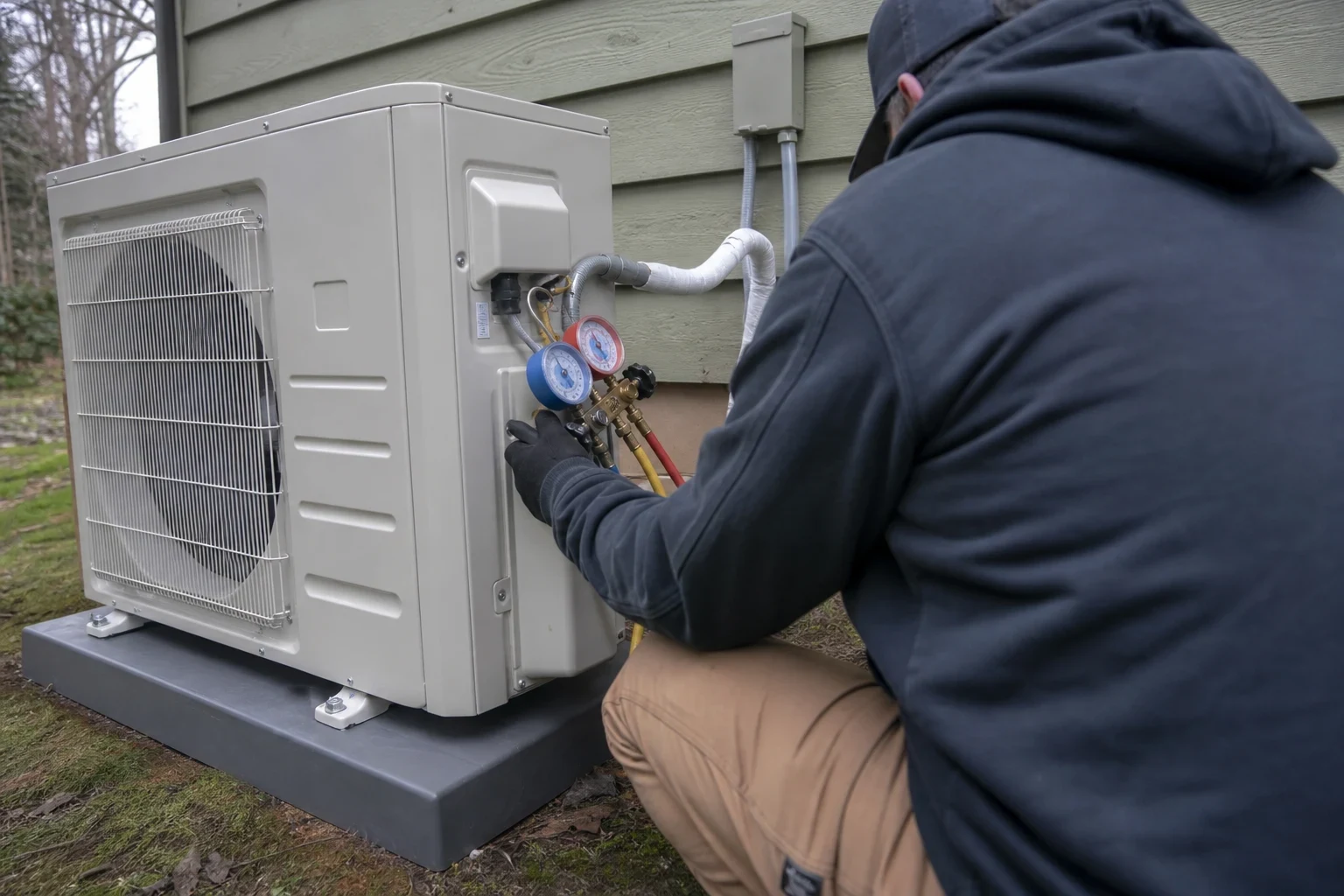
When a heat pump is the right call
A heat pump moves heat instead of burning fuel to make it. In winter the outdoor unit pulls heat from the outside air and refrigerant carries it indoors. In summer a reversing valve flips the flow and the same system cools like an air conditioner. One unit can replace a furnace and AC pair, or work alongside the furnace you already have.
Cold-climate models with variable-speed inverter compressors keep producing useful heat well below freezing, which matters through an Inland Northwest January. Below a set balance point, backup heat takes over: electric heat strips in the air handler, or your existing gas furnace in a dual-fuel setup.
Houses with some age on them are where planning counts. A 100-amp panel, aluminum branch wiring or a decades-old R-22 condenser all change the right answer. If your existing ducts can't carry the airflow a ducted unit needs, we'll tell you plainly and talk through ductless mini-splits instead.
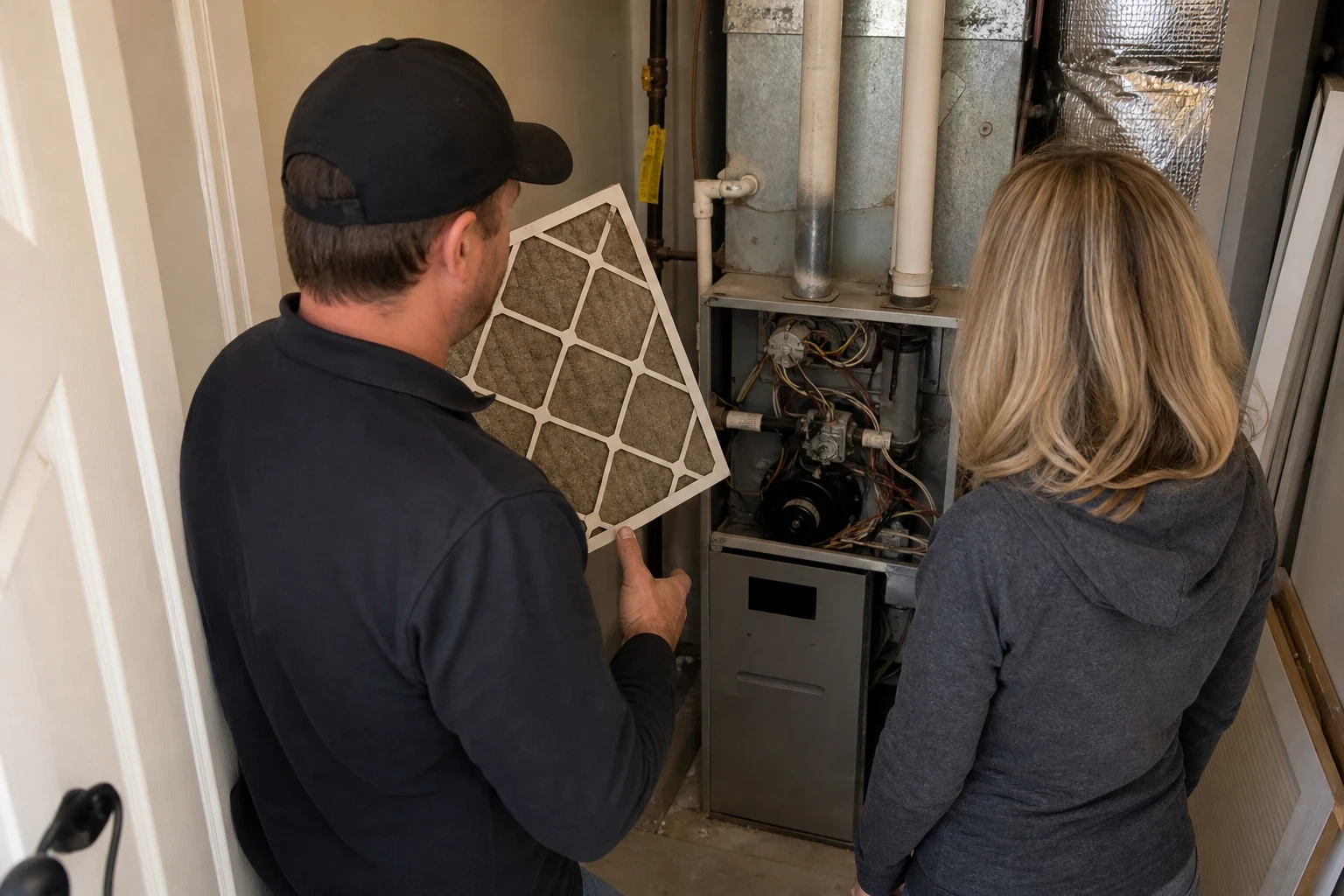
What our heat pump work includes
- 01
Room-by-room load calculation
We size the system with a Manual J calculation based on your insulation, windows and air leakage, not the tonnage of the old unit. An oversized heat pump short-cycles, which wears the compressor and leaves rooms clammy in summer.
- 02
Electrical capacity check
A heat pump plus backup heat strips can draw more than an aging panel was built for. We check panel size, breaker space and the wiring run to the outdoor unit before we quote, so the electrical side is in the plan from the start.
- 03
Installation and commissioning
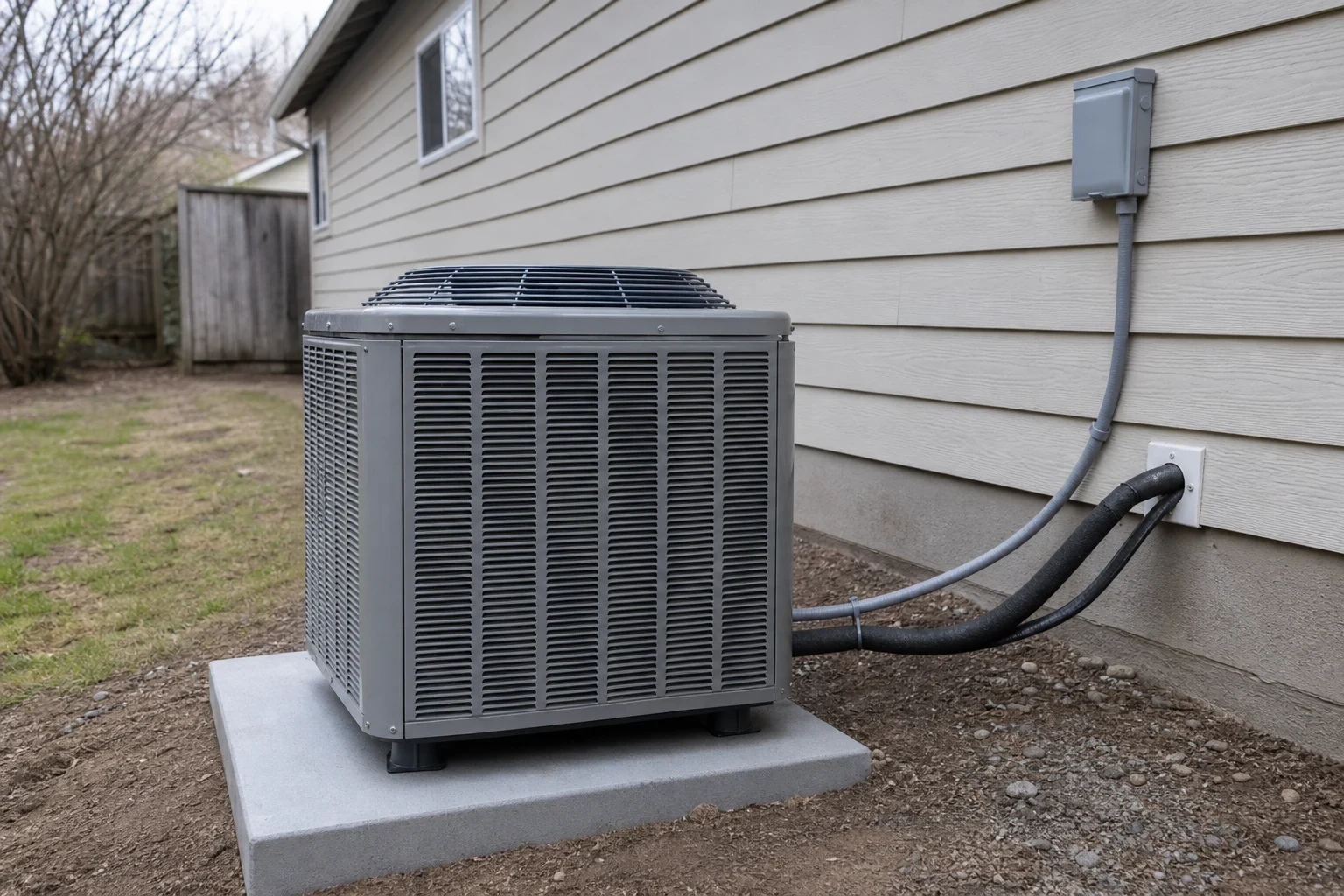
We set the outdoor unit on a raised pad or wall brackets above the snow line, then run and pressure-test the refrigerant line set. We pull a deep vacuum and charge to the manufacturer's spec. Before we leave, we verify airflow, temperature split and defrost operation.
- 04
Dual-fuel and thermostat setup
If you keep a gas furnace as backup, we wire the controls so the system switches over at the right outdoor temperature. A thermostat that isn't configured for a heat pump calls for backup heat too often and eats the savings.
- 05
Heat pump repair
We diagnose stuck reversing valves, defrost board and sensor faults, failed capacitors and contactors, leaks at flare joints and inverter board problems. The diagnostic fee is credited toward the repair.
- 06
Rebate and tax credit paperwork
Avista rebates and federal tax credits can apply to a new heat pump, and we help you claim them. We hand over the equipment details and efficiency ratings those forms ask for, so filing isn't guesswork.
Questions about Heat Pumps?
Call(509) 512-2814Signs your heat pump or current system needs attention
Backup heat runs constantly
If the auxiliary heat light stays on in mild weather, the heat pump isn't doing its share. Common causes are low refrigerant, a failed outdoor fan motor or a thermostat miswired during a past repair.
Ice that won't clear
Light frost on the outdoor coil in winter is normal, and the defrost cycle should melt it off every so often. A unit encased in ice points to a bad defrost board, a stuck sensor or poor drainage under the unit.
Cold air in heat mode
Heat pump air feels milder than furnace air, but truly cold air from the vents usually means a stuck reversing valve or a low refrigerant charge.
Short cycling
Starting and stopping every few minutes often traces back to an oversized unit or a failing sensor. Either way, it shortens compressor life.
An AC still running on R-22
R-22 refrigerant is no longer produced, so recharging an aging AC keeps getting more expensive. Replacing it with a heat pump covers your cooling and most of your heating in one install.
How a heat pump installation goes
- 1
Walk-through and measurements
We look at your current equipment, electrical panel, ducts and insulation, plus where the outdoor unit can sit with proper clearance and drainage. We also note past repairs, like spliced wiring or a patched line set, that need sorting out.
- 2
Itemized quote on paper
Nothing gets ordered or removed until the full scope is in writing. Equipment, backup heat, electrical work and permits each get their own line. Installs and replacements come with a free estimate.
- 3
Install day
Most single-system replacements finish in a day or two. We lay drop cloths along our path, remove the old equipment and set the new indoor and outdoor units.
- 4
Startup and walkthrough
We commission the system and show you how the thermostat handles backup heat. We recover the old refrigerant properly, haul away the old equipment and schedule the permit inspection.
What affects heat pump cost
Two houses the same size can need very different heat pump setups. The price depends on what your home needs and what it already has. Your written quote lists each part, so you can see where the money goes.
- System size and type
- Capacity, cold-climate rating and compressor type all move the price. A variable-speed inverter unit costs more up front but holds heat output better in deep cold.
- Electrical upgrades
- Some older homes need a new dedicated circuit or a larger panel to carry the heat pump and backup strips. We find this at the walk-through, not on install day.
- Backup heat choice
- Electric heat strips and a dual-fuel pairing with your existing gas furnace cost different amounts to install and to run. We explain the tradeoff for your house.
- What's already there
- Whether the old line set can be reused, the outdoor unit needs a pad or brackets, and how much old equipment comes out all affect labor.
- Permits and rebates
- Mechanical and electrical permits are part of the job. Avista rebates and federal tax credits can lower your net cost, and we help you claim them.
What homeowners ask us about heat pumps
Does a heat pump really hold up during a deep freeze?
A cold-climate model sized correctly for your house handles most of the heating load even when it's well below freezing outside. When temperatures drop further, backup heat kicks in on its own. We pick the switchover point carefully so the backup only runs when it actually needs to.
Can I keep my gas furnace?
Yes. In a dual-fuel setup the heat pump handles mild and moderate weather, and the furnace takes over when it gets very cold. It's often a good fit when your furnace still has life left in it.
My house has been around a while. Will a heat pump work with my existing ducts?
Often it can, but heat pumps move more air at lower temperatures than furnaces from decades ago did, so we check whether your ducts can carry that airflow. If they can't, ductless mini-splits skip ducts entirely, and we'll walk you through that option.
Do you repair heat pumps you didn't install?
Yes, we work on all major brands. Many of the problems we see in older homes come from earlier repairs, such as mismatched parts or thermostat wiring that was never set up for a heat pump.
How often should a heat pump be serviced?
Twice a year is ideal, since it runs for both heating and cooling. A spring and fall visit catches weak capacitors, dirty coils and charge problems early. Our maintenance plans include tune-ups, repair discounts and priority scheduling.
What if my heat pump quits on a winter night?
Pick up the phone whatever the hour, because our emergency repair line runs around the clock. A 2 a.m. visit is billed like a weekday one, since we charge no emergency or after-hours fees. In the meantime, set the thermostat to emergency heat so the backup strips or furnace keep the house warm.
Find out what your house can handle
Call for a free quote on a new heat pump, or for 24/7 emergency repair if yours has stopped. We start with your panel, your existing equipment and the past repairs nobody wrote down.