ServicesFurnace Repair
Furnace Repair in Rockford
If your furnace short-cycles, blows cold air or never lights, we trace the fault through each stage of startup until the cause is clear. The repair price is written down before any part comes out, and the diagnostic charge is credited against the work you approve.
Finding the Fault, Not Just the Symptom
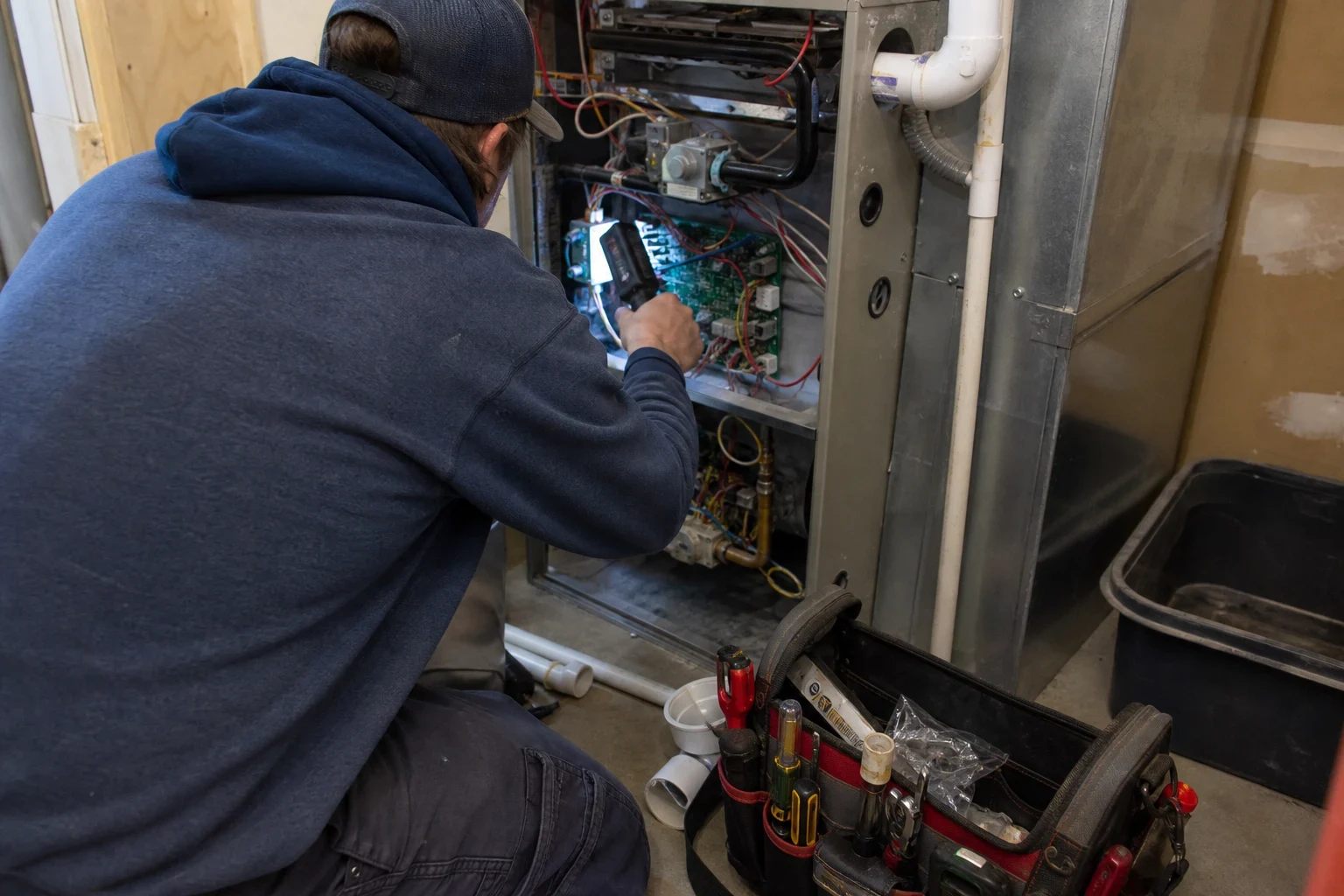
Every gas furnace follows the same order on a call for heat. The thermostat closes, the inducer motor clears the flue, a pressure switch confirms there is draft, and only then does the igniter glow, gas reach the burners and the flame sensor prove fire within a few seconds. A no-heat call means one step in that order broke. We measure each stage with a multimeter and a manometer, so the part we replace is the one that failed rather than the easiest guess.
Furnaces with twenty or more winters behind them bring extra variables. Many have had several technicians inside them, and some carry universal parts, a bypassed rollover switch or wiring spliced around a control board. Those shortcuts can mask the original fault and start new ones. We inspect past repairs as carefully as today's failure, then give you a straight answer on whether the unit deserves the repair or whether furnace installation is the better spend.
What a Furnace Repair Visit Covers
Startup sequence check
We run the furnace from a cold call for heat and read the control board fault codes. On units without a board, we test each component directly.
Ignition and flame components
Hot surface igniters, spark igniters, standing pilots and thermocouples are tested and cleaned or replaced. A coated flame sensor is one of the most common reasons burners light and drop out within seconds.
Safety switches and venting
We test limit, rollover and pressure switches and check the inducer motor and flue draft. If someone has jumpered a safety, we learn why it was tripping before we put it back in service.
Blower and electrical
Blower motors, run capacitors, belts, relays and transformers are measured against their ratings. A weak capacitor often shows up as a motor that hums but will not spin.
Heat exchanger and combustion check
We look for cracks and rust-through on the heat exchanger and test for carbon monoxide at the supply registers and around the appliance. On a furnace that has run for decades, this finding usually settles the repair-or-replace question.
Signs Your Furnace Needs Repair
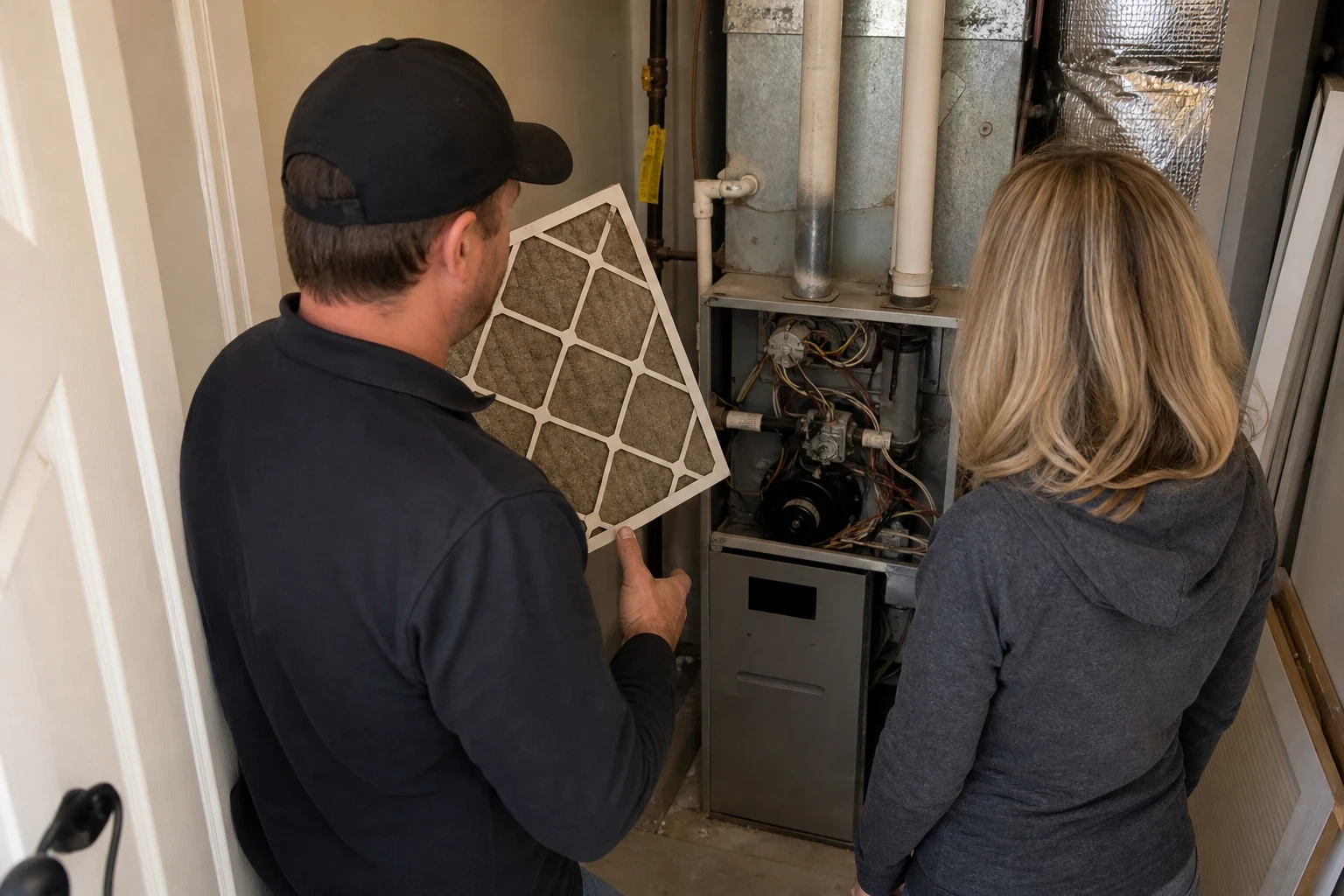
- Burners light, then quit
- Flame that holds for a few seconds and dies usually points to a fouled flame sensor, a weak pressure switch or poor draft in the flue.
- Fan runs, air stays cold
- The blower works but the burners do not. A cracked igniter, a gas valve that will not open or a limit switch guarding an overheated unit are the usual suspects.
- Short cycling
- Constant on-off runs wear out igniters and blower motors early. A clogged filter, an oversized furnace or a failing limit switch is typically behind it.
- Booms or squeals during a cycle
- A boom as the burners fire means gas built up before ignition, often from dirty burner ports or a slow igniter. A high squeal tends to come from a worn belt or dry motor bearings on belt-drive blowers.
- Yellow flame, soot or a CO alarm
- A soft yellow flame or soot near the burners signals incomplete combustion. If your carbon monoxide alarm goes off, get everyone out of your home and contact the gas utility first, then us.
- Gas bills climbing for no reason
- Dirty burners or a struggling inducer make a furnace burn more gas to deliver the same heat.
How a Furnace Repair Goes
- 1
Your phone call
We ask what the furnace is doing, roughly how old it is and whether anyone has worked on it recently. The phone is answered at any hour, and we never add emergency or after-hours fees.
- 2
Diagnosis at your home
The technician runs the furnace through startup, tests the components and checks combustion. We show you what we found, including any earlier repairs that worry us.
- 3
Written price, your decision
Parts and labor are listed on paper before anything is changed. Go ahead with the repair and the diagnostic fee is credited toward it.
- 4
Repair and test cycles
After the part is in, we run several complete heating cycles and confirm temperature rise and gas pressure are within spec. We clean the work area and swap the filter if it is due.
What Affects the Cost of Furnace Repair
The price mostly depends on which part failed and how much work it takes to reach it. A discontinued original part can add cost on an aging furnace. Either way, you see the figure in writing before we start.
- The failed component
- Cleaning a flame sensor is a quick job. An inducer motor, control board or gas valve is a bigger part with more labor.
- Age and parts availability
- Parts for furnaces built in the 1980s and 1990s sometimes have to be tracked down or replaced with a universal fit, which we explain before installing.
- Earlier repairs that need correcting
- Spliced wiring, a jumpered safety or a mismatched part from a past fix may have to be corrected so the furnace operates safely.
- Access and location
- A unit wedged into a crawlspace or a low attic means slower work than one standing in a basement with room on every side.
Furnace Repair Questions
- Should I repair my old furnace or replace it?
- It depends on the condition of the heat exchanger, the size of the repair and how often the unit has broken down lately. A cracked heat exchanger usually means replacement. If the furnace is sound and only one part failed, repair is often the sensible choice. We lay out both options and you decide.
- Do you charge extra for nights or weekends?
- Our rates stay the same around the clock, with no surcharge for after-hours or emergency calls. A furnace that quits on a holiday weekend is priced by the part and labor it needs, just like a Tuesday afternoon job.
- Can you still get parts for a standing pilot furnace?
- Often, yes. Thermocouples, pilot assemblies and many gas valves for older standing pilot furnaces are still made or have direct replacements. When an exact part is no longer available, we explain the alternatives before installing anything.
- Is it safe to keep resetting my furnace?
- A reset clears a lockout, but the lockout happened for a reason. Repeated resets on a furnace tripping its limit or rollover switch can point to overheating or a venting fault. Turn it off and have it checked.
- How do I know the price before you start?
- Once the diagnosis is done, we give you a written quote. Nothing is replaced until you approve it.
Bring Back Steady, Safe Heat
Tell us on the phone what the furnace is doing, and a technician will come out to find what is causing it. You get the price on paper before any work, and the diagnostic fee is applied to the repair.