ServicesFurnace Installation
Furnace Installation in Rockford, WA
We replace worn-out furnaces with new units sized to how your home actually loses heat, not to the label on the old one. We check the venting, gas line and wiring before we quote, so the price you approve covers the whole job.
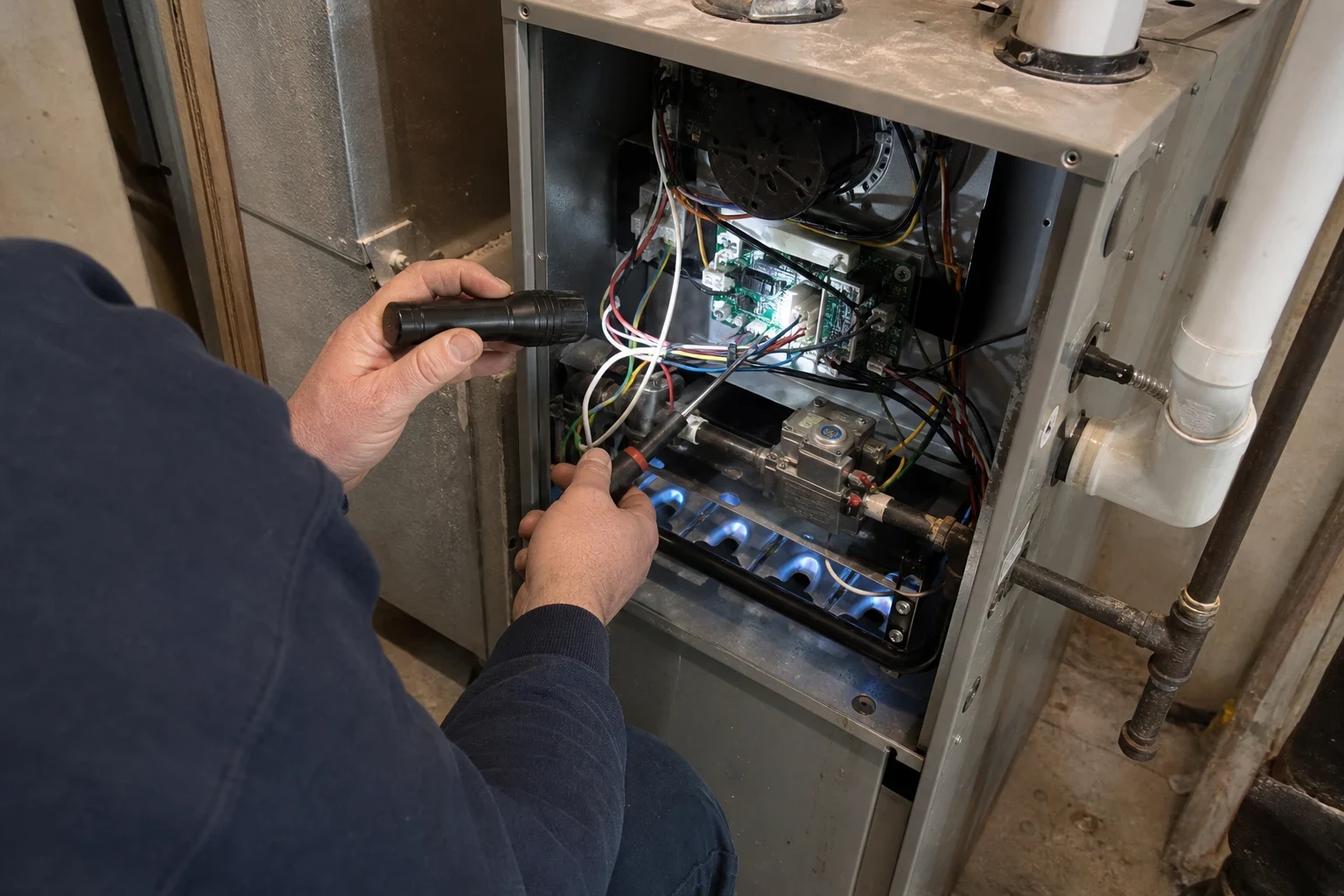
A new furnace that fits the house you have
Many furnaces we pull out were oversized from the start. An oversized unit hits the thermostat setting too fast, shuts down before its heat exchanger has warmed through, then fires again minutes later. That stop-and-start pattern wears out igniters and blower motors years ahead of schedule. Older homes add their own layers: a masonry chimney that also vents the water heater, thermostat wiring with no common wire, a gas line sized for a smaller appliance, or a past repair nobody documented.
We look at all of that before we recommend a model. If a 95 percent condensing furnace is the right call, we plan the PVC venting and condensate drain. If your chimney setup makes an 80 percent unit the better fit, we explain why and show you what we found.
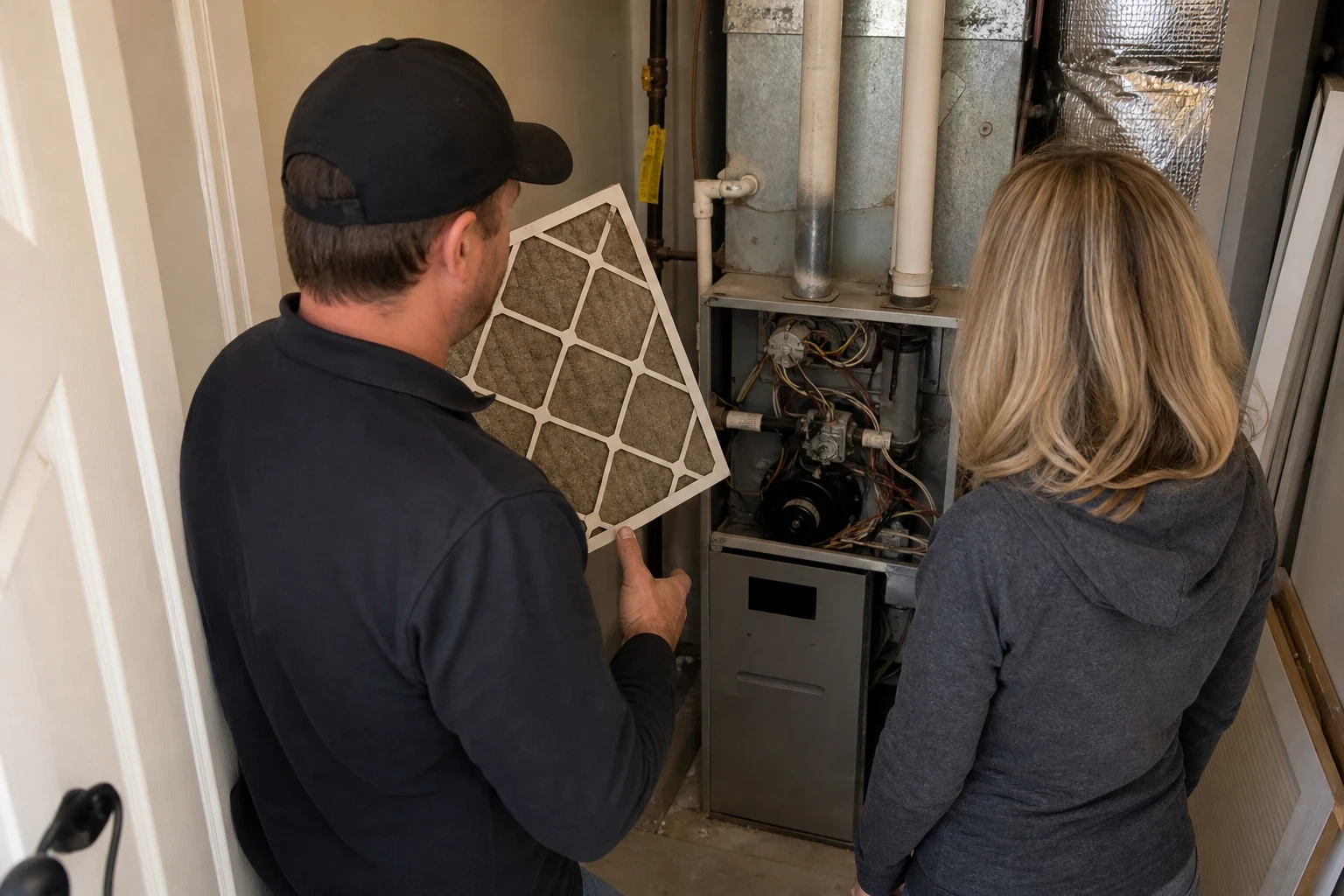
What a furnace installation includes
- 01
Heat load calculation
We measure rooms, windows and insulation levels to size the furnace by BTU need. In a home that has had new windows or attic insulation since the old furnace went in, the right size is often smaller.
- 02
Venting and chimney check
A condensing furnace vents through PVC, which can leave a water heater alone in an oversized masonry chimney where it drafts poorly. We check for that and plan the fix, such as a properly sized liner, before installation day.
- 03
Gas, electrical and condensate
We confirm the gas line can deliver full input pressure, verify the furnace circuit, and route the condensate drain to a floor drain or a pump. Each one is a common source of callbacks on rushed installs.
- 04
Thermostat wiring
Many older thermostat runs have only two or three conductors. We add a common wire or a compatible adapter so a modern thermostat powers reliably.
- 05
Permit, startup and haul-away
We pull the mechanical permit, schedule the inspection, start the furnace and measure gas pressure and temperature rise. The old unit leaves with us.
Questions about Furnace Installation?
Call(509) 512-2814Signs it is time for a new furnace
A cracked heat exchanger
A crack lets combustion gases mix with the air your blower moves through the house. On most older furnaces, replacing the heat exchanger costs close to a new unit.
Repairs stacking up
An inducer motor one winter and a control board the next is a pattern. When repair bills keep landing on a furnace past 15 to 20 years old, we will tell you plainly whether another repair makes sense.
Uneven rooms and long run times
Cold bedrooms and a furnace that runs constantly on the coldest Spokane-area nights can mean a worn blower, a failing burner or a unit that was never sized right.
Yellow flame or soot
A lazy yellow burner flame or soot near the burners points to incomplete combustion. That needs attention right away, and on an older unit it often starts the replacement conversation.
Parts no longer made
Some older standing-pilot and early electronic-ignition furnaces use controls that are discontinued. One failed part can leave you waiting or paying for a salvaged component.
How installation day runs
- 1
Free in-home estimate
We inspect the old furnace, venting, gas line and electrical, then run the load calculation. You get an itemized quote in writing to approve before we touch anything, and the estimate itself costs nothing on a replacement.
- 2
Protect and disconnect
We lay down floor protection along the path to the furnace, shut off gas and power, and disconnect the old unit from the venting and plenum.
- 3
Set and connect
The new furnace goes in level on its base. We connect gas with a leak test on every joint, then the venting, condensate drain, wiring and filter rack.
- 4
Start up and measure
We fire the furnace, check manifold gas pressure, temperature rise and static pressure, and confirm the safety switches trip as designed. Most replacements finish in one day.
- 5
Walkthrough and inspection
We show you the filter size, the thermostat settings and where the shutoffs are, then coordinate the permit inspection.
What moves the price of a new furnace
Two furnaces with the same BTU rating can be very different jobs. The price depends mostly on what your home needs around the furnace, not just the box itself. Your written quote lists each item so you can see where the money goes.
- Efficiency and features
- An 80 percent single-stage furnace costs less than a 95 percent condensing unit with a two-stage burner and variable-speed blower. The higher-efficiency models burn less gas and run quieter.
- Venting changes
- Switching to a condensing furnace means new PVC vent and intake runs, and sometimes a chimney liner for the water heater left behind.
- Gas line and electrical updates
- An undersized gas line or a furnace circuit without proper disconnect adds labor and materials.
- Location and access
- A furnace in a tight closet, crawlspace or attic takes more time to remove and set than one in an open basement.
- Permit and inspection
- The mechanical permit fee is part of every installation and is listed on your quote.
Furnace installation questions
Can I just replace my furnace with the same size?
You can, but it is often the wrong size. Many original furnaces were oversized, and insulation or window upgrades since then lower the load further. A load calculation takes little time and usually pays for itself in steadier heat and less cycling.
Should I get an 80 percent or a 95 percent furnace?
In most homes a 95 percent condensing furnace saves enough gas over its life to justify the cost. The exceptions are homes where routing PVC venting and a condensate drain is very difficult. We look at your venting and tell you which makes sense.
Will my water heater be affected?
It can be. If the old furnace and a gas water heater share a chimney, removing the furnace leaves the water heater venting alone in a flue that may be too large to draft well. We check for this and include the fix in the quote.
How long will I be without heat?
Most replacements are done in one working day, with heat back on by evening. In a cold snap we schedule early starts and keep the old unit running until the new one is ready to set when we can.
Should I consider a heat pump instead?
Sometimes a heat pump paired with a gas furnace as backup is a good fit, especially if you also want cooling. Our Heat Pumps page covers how those systems work, and we can quote both options during the same visit.
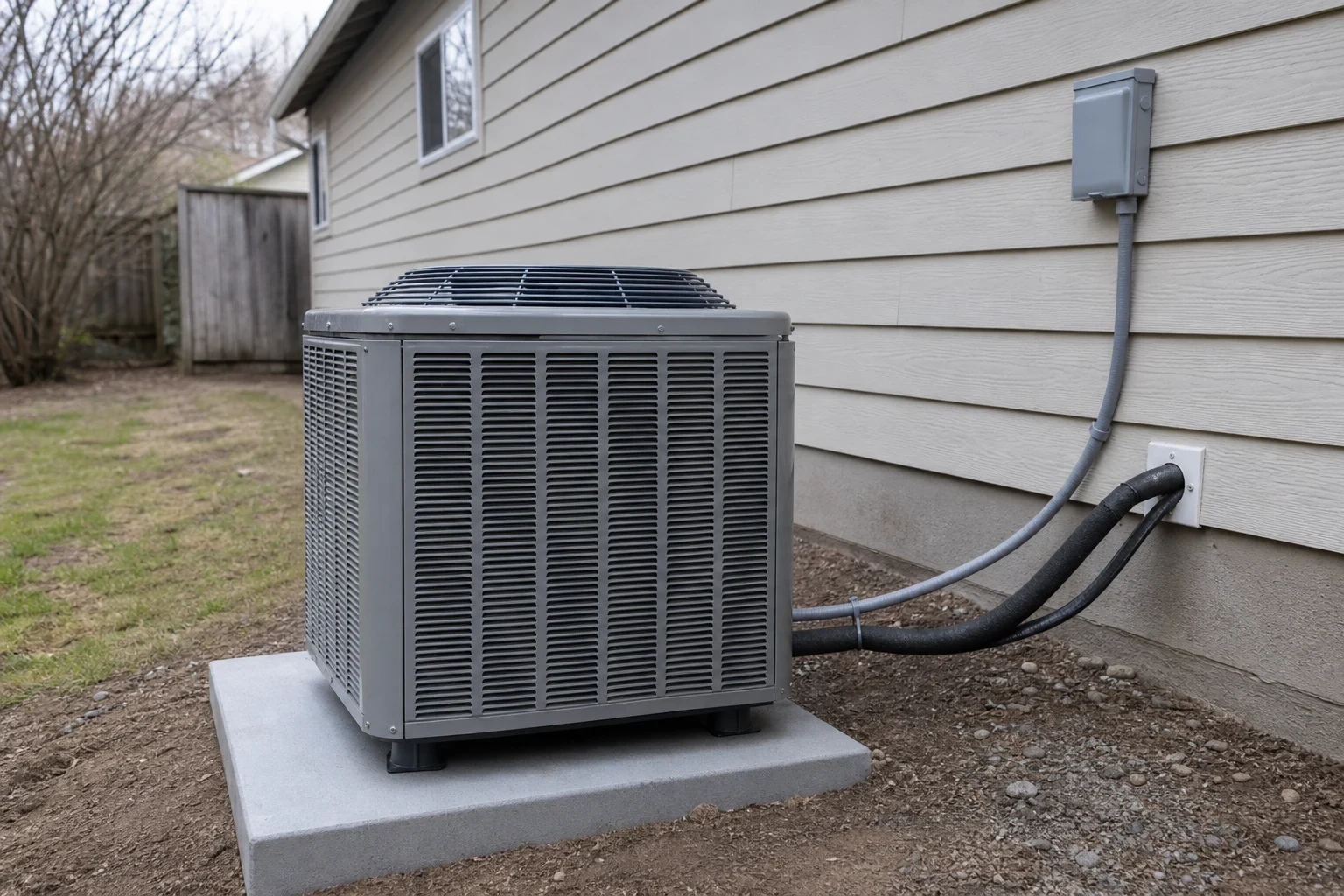
Get a furnace sized to your home
We will inspect your current system, run the load calculation and give you a written quote with every line item. The estimate costs nothing.