ServicesAC Installation
AC Installation in Rockford
We size each new central air system from a measured cooling load, match the indoor coil to your furnace and check the electrical before any equipment is ordered. In a house with decades of past work, a tired panel or a reused line set can quietly shorten a new system's life.
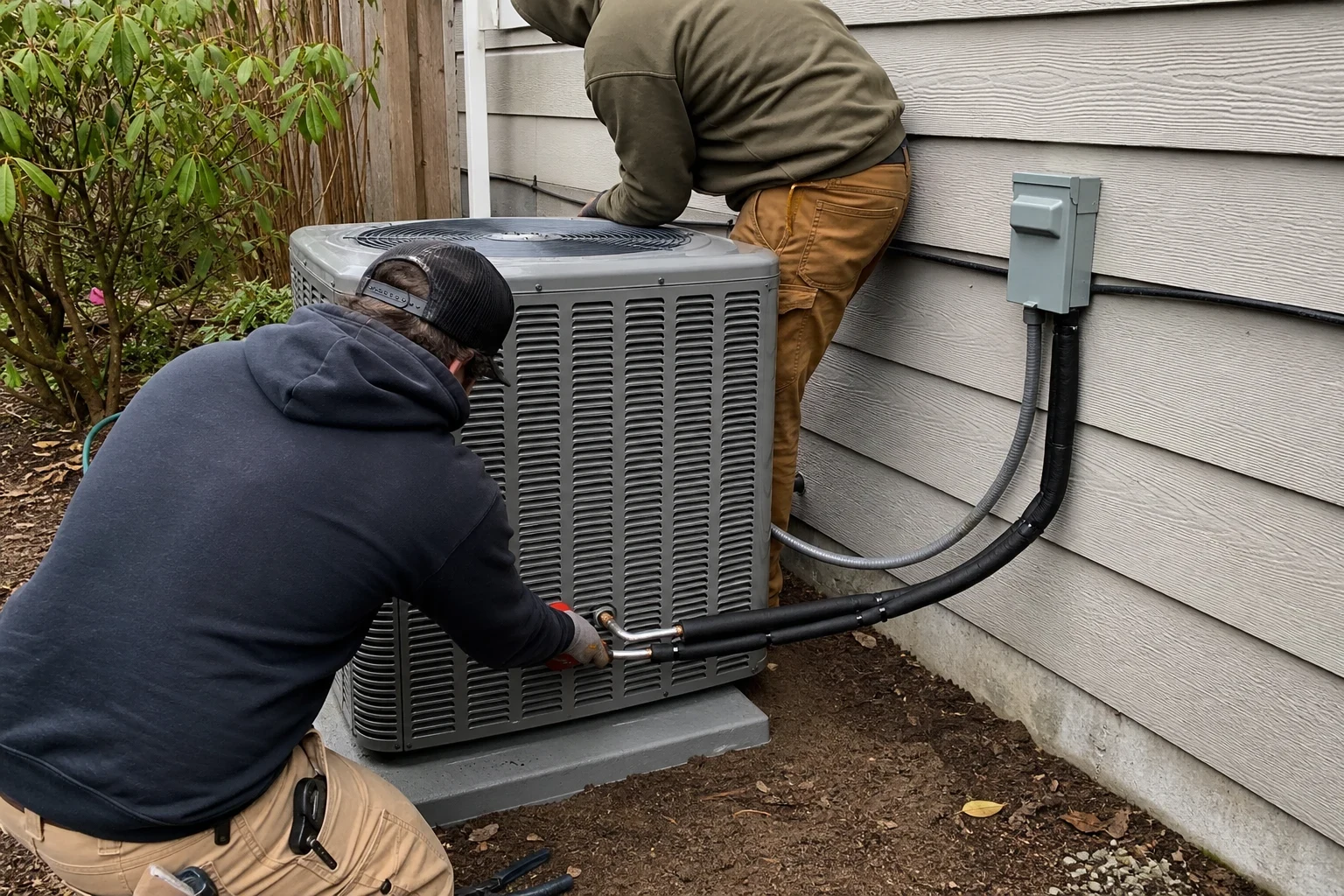
A new air conditioner that fits the house you actually have
Most AC installations go wrong before the truck arrives. The unit gets sized by square footage or by whatever was there before, and an oversized condenser short-cycles. It cools the air fast, shuts off before it pulls moisture out, and wears its compressor with constant starts.
We start with the house. We measure rooms, note window area, attic insulation and which way the walls face, then run a load calculation to pick the tonnage. In older houses we also look at what earlier owners left behind: a disconnect with no rating label, a condensate line draining into a floor drain that no longer works, or copper lines buried in a wall that were sized for an old R-22 unit.
If your house has never had central air, or your current system is past fixing, this is the right page. If your AC is running but not cooling, start with AC repair; a failed capacitor or a small leak is often worth fixing first, and we will tell you honestly which way makes sense.
What a full installation includes
Load calculation and sizing
We calculate the cooling load room by room instead of guessing from square footage. That number sets the condenser tonnage and keeps the system from short-cycling.
Matched evaporator coil
The indoor coil has to match both the outdoor unit and your furnace blower. A mismatched coil is a common reason new systems never reach their rated efficiency, so we confirm the blower can move enough air across it.
New refrigerant line set where needed
Old line sets from R-22 systems can hold mineral oil and debris that damage a modern compressor. We inspect the copper and replace it when it is undersized, kinked or contaminated, and explain why if we recommend it.
Electrical check and disconnect
We verify the breaker size, wire gauge and panel capacity against the new unit's nameplate. Many older panels need a new breaker or a properly rated disconnect at the condenser, and we flag that in the quote rather than on install day.
Pad, drain and startup
The condenser sits level on a new pad with proper clearance for airflow. We run the condensate drain to a working outlet, then pull a deep vacuum, charge the system and record pressures and temperatures at startup.
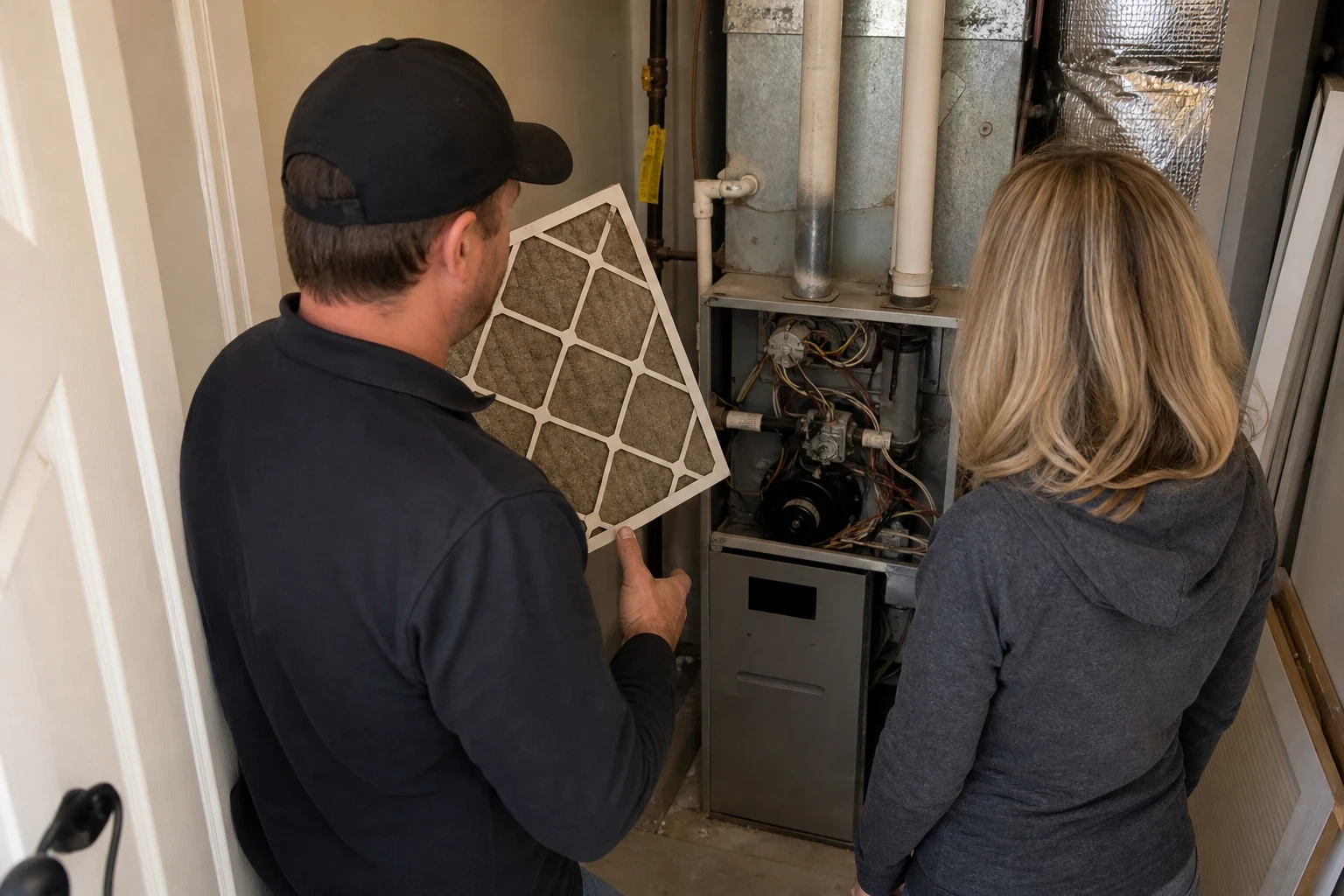
When replacing your AC makes more sense than repairing it
- It runs on R-22 refrigerant
- R-22 is out of production, so every recharge on one of these units costs more than the last. When a leak shows up in an R-22 system, replacement usually wins on the numbers.
- Repairs keep stacking up
- A compressor that hard-starts, a coil with repeated leaks or a condenser fan motor on its second replacement points to a unit near the end. We will show you what we found before suggesting anything.
- Rooms upstairs never cool down
- On hot afternoons in the Rockford area, an undersized or tired system can run all day and still leave bedrooms warm. Sometimes the fix is the unit; sometimes it is a zone better served by a ductless mini-split.
- You have no central air at all
- Many older houses were built with only a furnace. If the furnace and blower are in good shape, adding a coil and condenser is often straightforward.
- Your furnace is being replaced anyway
- Replacing the furnace and AC together lets us match the blower and coil from the start, and it means one installation day instead of two.
How an installation runs, start to finish
- 1
Free in-home estimate
We walk the house, check the furnace, panel and existing equipment, and take the measurements for the load calculation. Estimates are free on installations and replacements.
- 2
Written quote with options
Before any work begins, we hand you a written quote that spells out the equipment, the line set plan and any electrical changes. We explain the efficiency levels in plain terms so you can choose what fits your budget and your summers.
- 3
Permit and scheduling
We pull the permit and set an install date. Most installs take one day; houses needing a new line set routed through finished walls can take longer, and we tell you that up front.
- 4
Installation day
We lay down floor protection, recover refrigerant from the old system, remove the old equipment and set the new condenser and coil. Brazed joints are purged with nitrogen so no scale forms inside the copper.
- 5
Startup, inspection and walkthrough
We vacuum the system, charge it to spec, test operation and clean up. Then we show you the thermostat settings and filter location, and schedule the inspection.
What moves the price of a new AC
No two installations cost the same, because the house decides most of the work. We price from what we see at the estimate and put every line in writing, so the number you approve is the number you pay unless you change the scope.
- Tonnage and efficiency
- A larger condenser costs more, and so does a higher SEER2 rating. A higher rating lowers summer bills, but the payback depends on how many hours you actually run it.
- Electrical upgrades
- Aging panels may need a new breaker, heavier wire or a new disconnect. In some houses the panel itself lacks capacity, which is the single biggest surprise we try to catch early.
- Line set length and routing
- Reusing a clean, correctly sized line set saves money. A new run through a crawlspace is simple; one through finished walls or a second floor takes more labor.
- Furnace compatibility
- If your furnace blower cannot move enough air for the new coil, we will say so. Pairing the AC with a furnace installation sometimes costs less overall than forcing a match.
AC installation questions
- Can you add central air to an older house that only has a furnace?
- Usually, yes. We check that the furnace blower has the capacity and speed taps to handle cooling airflow and that there is room above it for a coil. If the furnace is near the end of its life, we will talk about replacing both at once.
- Why not just install the same size unit I had before?
- The old unit may have been sized wrong, and the house may have changed since with new windows, attic insulation or an addition. A load calculation often shows a smaller unit will cool better and remove more humidity.
- Do I need a new line set?
- Not always. If your copper is the right diameter, has no kinks and came off a system with compatible oil, we can flush and reuse it. Lines that served R-22 equipment are the most likely to need replacement.
- Should I consider a heat pump instead?
- It is worth comparing at the estimate. A heat pump moves heat out of your home in summer exactly as a central air conditioner does, then runs its refrigerant cycle backward to supply warmth on cool days, so the furnace burns less gas in spring and fall. That equipment can also qualify for a utility rebate from Avista and a federal tax credit, and we walk you through the paperwork for both. See Heat Pumps for how the two options stack up.
- How messy is installation day?
- Most of the work happens outside and at the furnace. We protect floors along our path, haul away the old equipment and refrigerant properly, and sweep up before we leave.
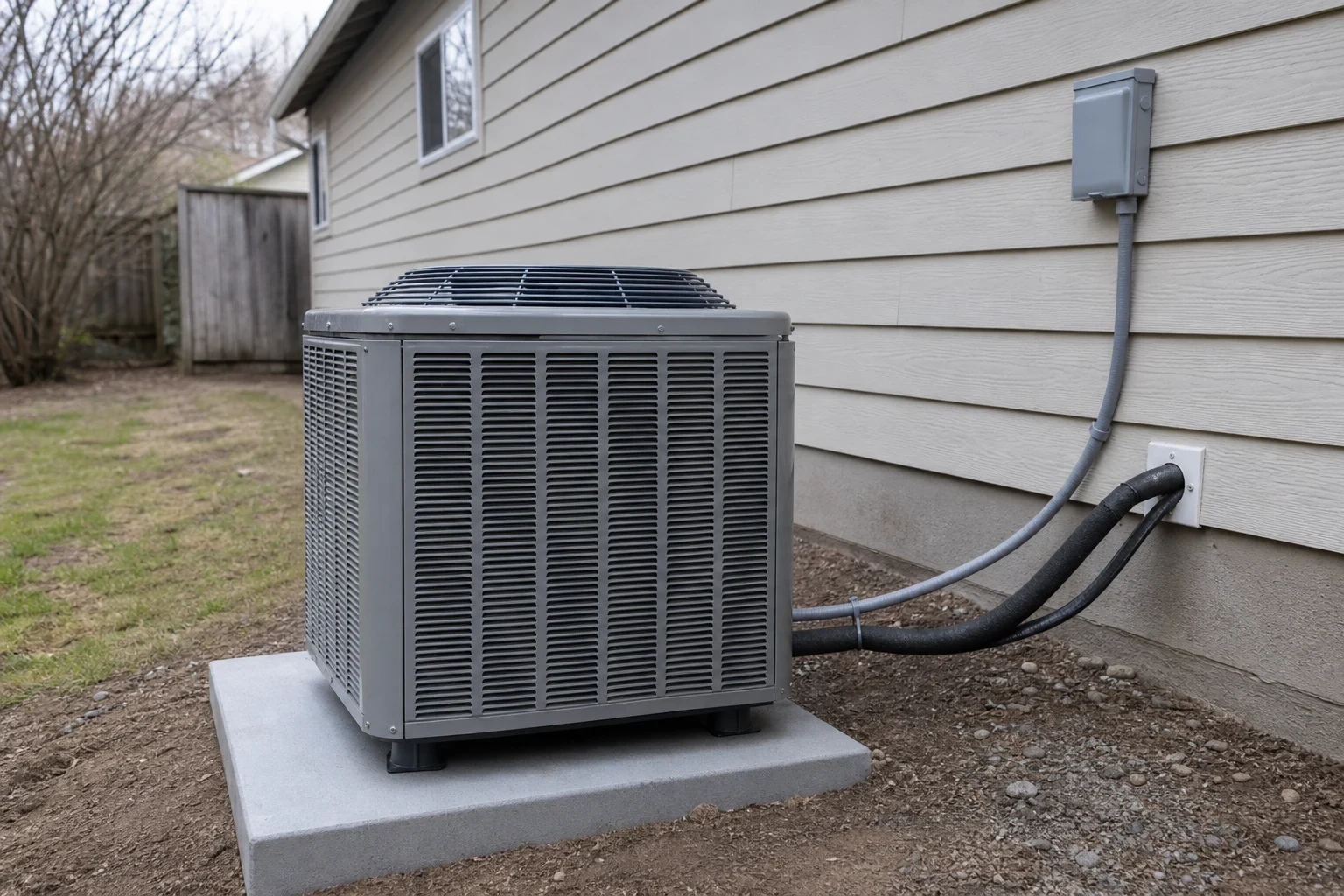
Ready to plan your new air conditioner
We will look at your furnace, panel and line set, run the numbers and give you a written quote. We serve Rockford, Spokane Valley, Liberty Lake and nearby towns.