ServicesDuctless Mini-Splits
Ductless Mini-Splits in Rockford
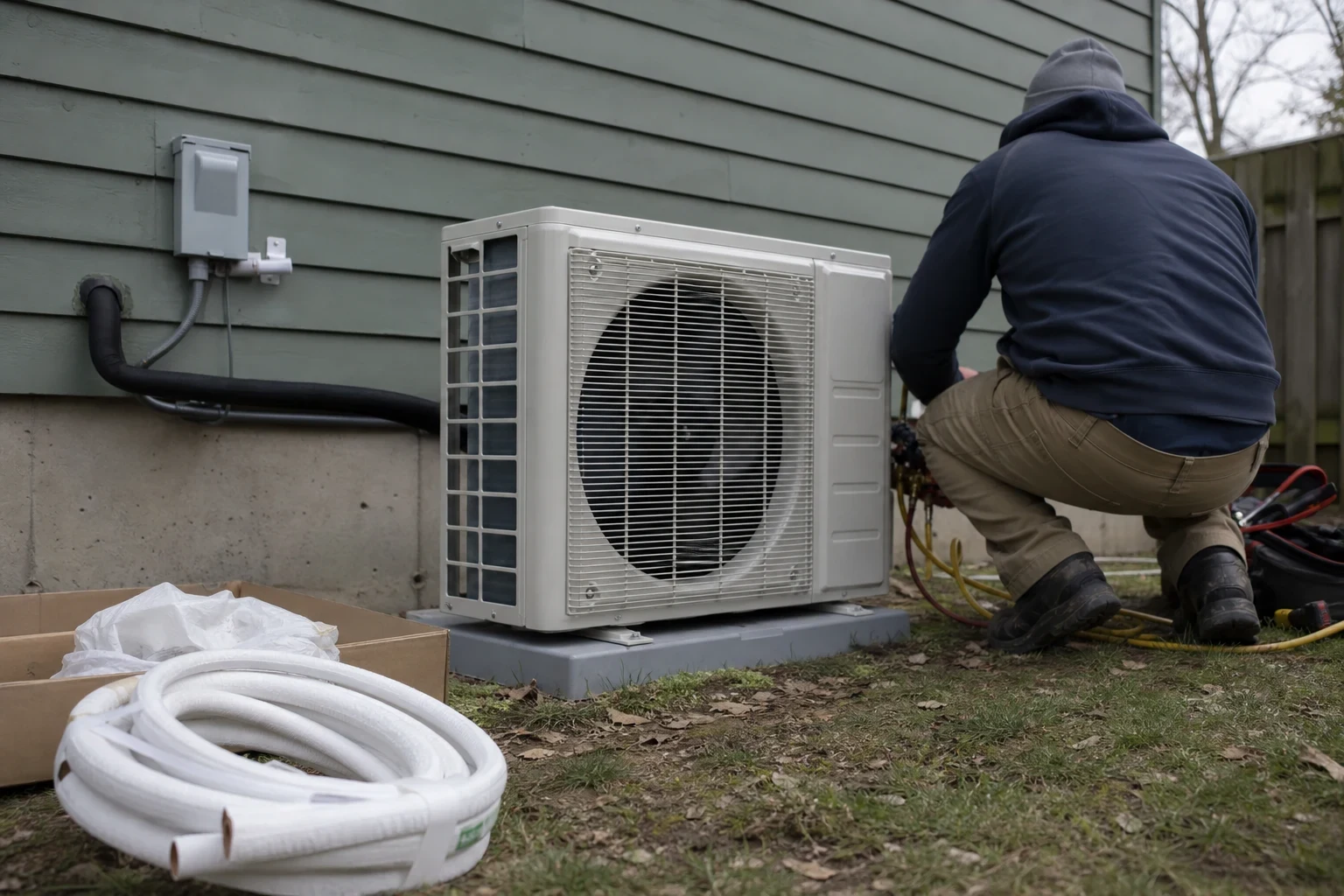
An outdoor compressor, a refrigerant line set and a wall opening about three inches across bring heating and cooling to a room with no ducts. We size every indoor head for its own room, work around old framing and plaster, and tell you straight what your panel can carry.
When a Mini-Split Is the Right Call
Many older houses were built around electric baseboard heaters, wall furnaces or a boiler, with no duct system at all. Others have ducts that never reached a later addition, a finished attic or a converted garage. A mini-split solves both cases without tearing into walls and ceilings.
The system is a heat pump. An outdoor compressor moves heat in or out through insulated copper lines to wall-mounted, ceiling or floor heads inside. Each head has its own thermostat, so the back bedroom and the sunroom stop fighting over one setting.
It is not always the answer. If your house already has sound ducts and a furnace in good shape, a ducted heat pump or a new central system may cost less per room. We will say so during the visit, and our Heat Pumps and AC Installation pages cover those options.
What Your Mini-Split Install Covers
- Heat loss figured for each room
- Before choosing equipment, we work out how much heat every room gains and loses, using window area, insulation, ceiling height and which way it faces. Balloon-framed walls with little insulation bleed heat quickly, and a head that is too small will run constantly and still fall behind.
- Panel and circuit check
- A mini-split needs a dedicated circuit and an outdoor disconnect. We look at your panel's capacity and its open breaker spaces before quoting, because older 60- or 100-amp services sometimes need attention first.
- Line routes planned around the house
- The copper refrigerant lines, condensate drain and control wire all pass through one core hole. We choose paths that miss hidden plumbing, old wiring and plaster that cracks when drilled carelessly, then cover outside runs with a painted line-hide channel.
- Outdoor unit placement
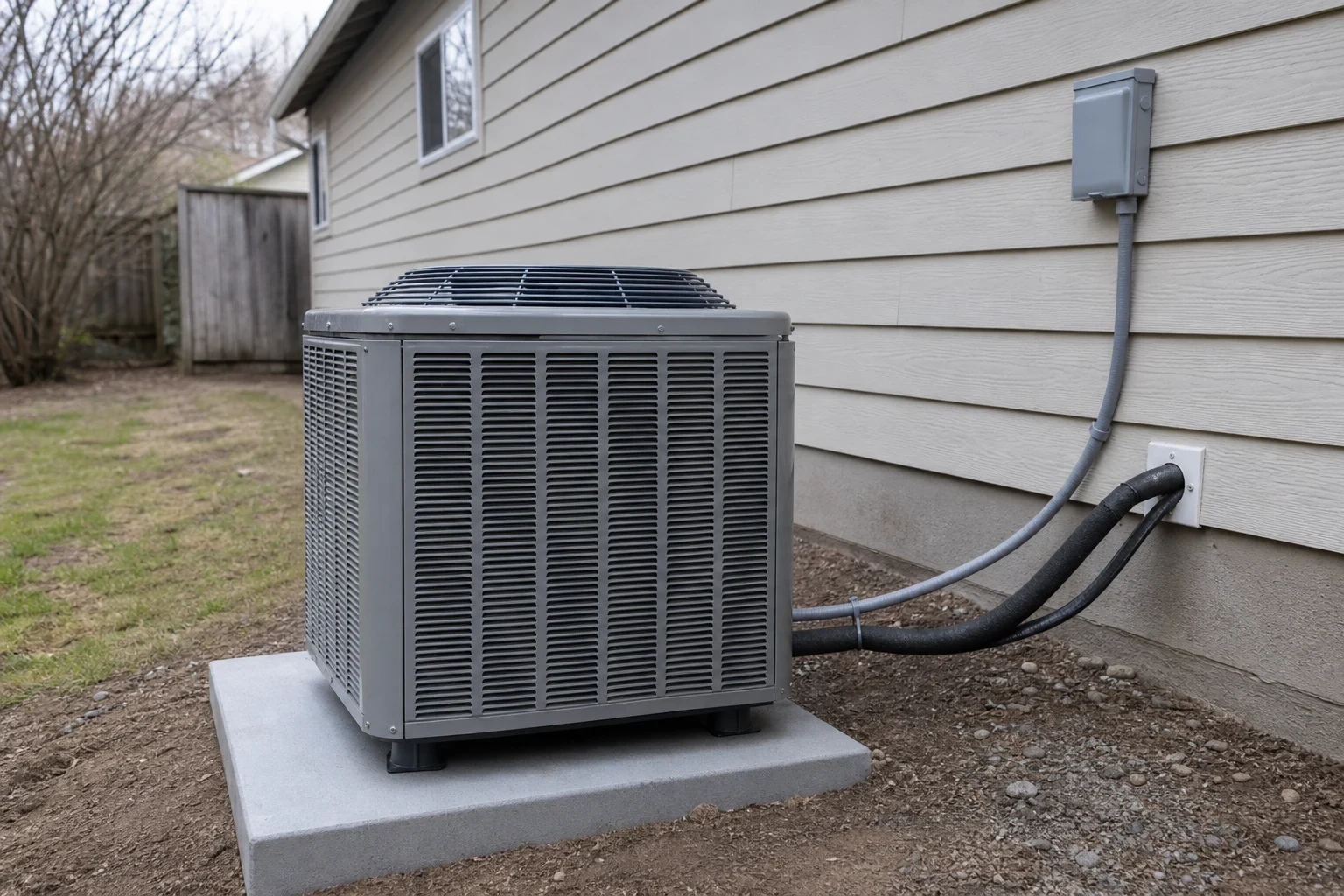
- The condenser sits on a pad or a wall bracket raised above the typical snow line, so snowfall and drifting cannot block the coil or bury the drain during winter defrost cycles.
- Vacuum, pressure test and startup
- We pressure test the connections with nitrogen, pull a deep vacuum to remove moisture, then release the charge and check operation in heating and cooling. Skipping this step is a common cause of early compressor failure.
- Rebate and tax credit help
- A qualifying mini-split is a heat pump, so it can count toward Avista rebates and federal tax credits. We walk you through claiming them and write down the model numbers the forms ask for.
Signs Your House Needs a Ductless System
High winter bills from baseboard heat
Electric resistance heaters turn one unit of electricity into one unit of heat. A mini-split moves heat instead of making it, so the same comfort usually takes noticeably less power.
An addition the furnace never reached
Rooms added decades after the house was built are often tied in with a single undersized duct or nothing at all. A dedicated head fixes the cold room without changing the rest of the system.
Window units every summer
If you haul window air conditioners in and out each year, a mini-split gives you quiet cooling with nothing blocking the sash.
Upstairs too hot, downstairs too cold
Older two-story houses and finished attics trap heat under the roof. Zoned heads let you cool the top floor without freezing the living room.
An aging wall furnace or boiler
When an old gas wall heater or boiler is near the end of its life, a ductless heat pump can take over most of the heating load, with the old system kept as backup if you choose.
How Your Install Goes
- 1
Walkthrough and quote
We go room by room, take measurements, open the panel and pick the best wall for each head. Before anything gets drilled, you have the full price on paper. On installations and replacements, that estimate costs you nothing.
- 2
Permits and an install date
Once you approve the quote, we file for whatever permit the job calls for and put you on the calendar. A single-zone system is usually a one-day job, while multi-zone setups can run into a second day.
- 3
Install day
We lay drop cloths, mount the head brackets, drill the core holes and run the line sets and drain. The outdoor unit goes on its pad or bracket, and the circuit and disconnect are wired.
- 4
Commissioning and walkthrough
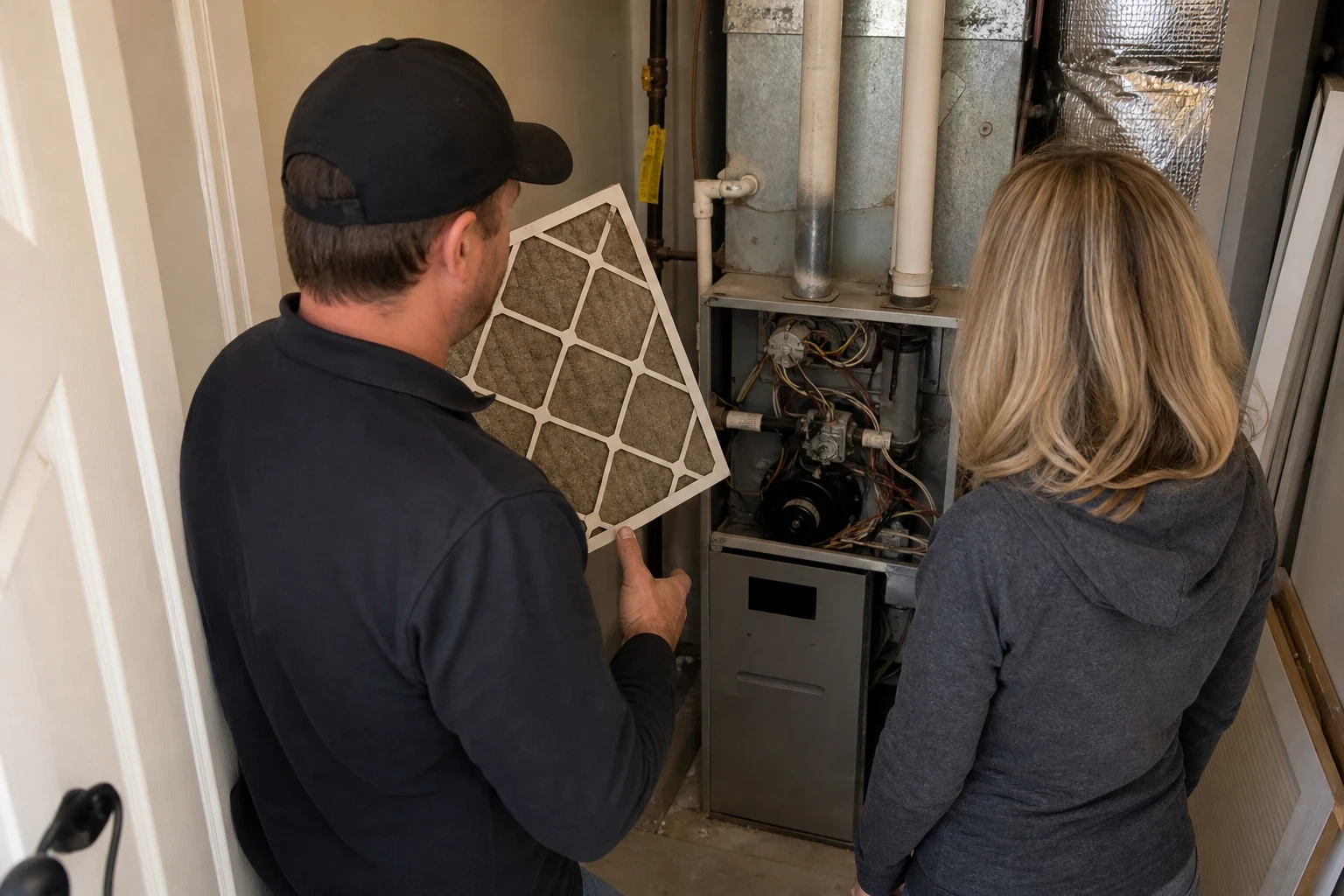
After the vacuum and charge, we run each head in both modes, show you the remote and how to rinse the filters, and clean up the drilling dust before we leave.
What Moves the Price of a Mini-Split
Two things drive most ductless prices: the number of indoor heads and how much of the house the refrigerant lines must cross to reach them. Your written quote lists the equipment, labor and any electrical work separately so you can see where the money goes.
- Number of zones
- One outdoor unit can feed a single head or several. Each added head means more equipment, more line set and more labor.
- Distance from condenser to head
- The shortest job puts the indoor head on an outside wall directly behind the condenser. Lines that have to cross an attic, drop through a crawlspace or pass through plaster walls add hours and material.
- Electrical upgrades
- If the panel has no room for a dedicated circuit, it may need a subpanel or service upgrade before the system can be installed.
- Head style and cold-weather rating
- Ceiling cassettes and floor consoles cost more than wall heads. Models built to keep heating in deep cold cost more up front but carry the house through winter with less backup heat.
Mini-Split Questions
Something not covered here? (509) 512-2814
Will a mini-split really heat my house through winter?
Cold-climate models keep producing heat well below freezing, and plenty of homeowners in the area heat with them all winter. Output does drop on the coldest nights, so we size for that and may suggest keeping a few baseboard heaters as backup.
Do I have to remove my baseboard heaters?
No. Most people leave them in place and turn the thermostats down. They become backup heat for a cold snap or a room without a head.
Will drilling damage my plaster walls?
We use a hole saw sized for the line set, score the surface first and support the lath to limit cracking. The indoor head's mounting plate covers the opening, so you do not see the hole once it is installed.
How much upkeep does a ductless system need?
Rinse the washable filters every month or two. Once a year the coils, blower wheel and drain should be cleaned to prevent mold and drips. Our Maintenance Plans include tune-ups, repair discounts and priority scheduling.
Do you repair mini-splits too?
Yes. If a head stops heating or starts leaking water, we diagnose it, and the diagnostic fee is credited toward the repair. Our emergency line runs 24/7 with no emergency or after-hours fees.
Find Out What Each Room Needs
We will look at your rooms, your panel and your walls, then give you a written quote with the head count and line routes spelled out. Rockford and nearby towns like Spokane Valley and Liberty Lake are in our area.