ServicesAC Repair
AC Repair in Rockford
An air conditioner that blows warm air, ices over or keeps knocking out its breaker has one part at the root of it. We trace that part and the reason it quit, test before replacing anything on older systems, and put the price on paper first.
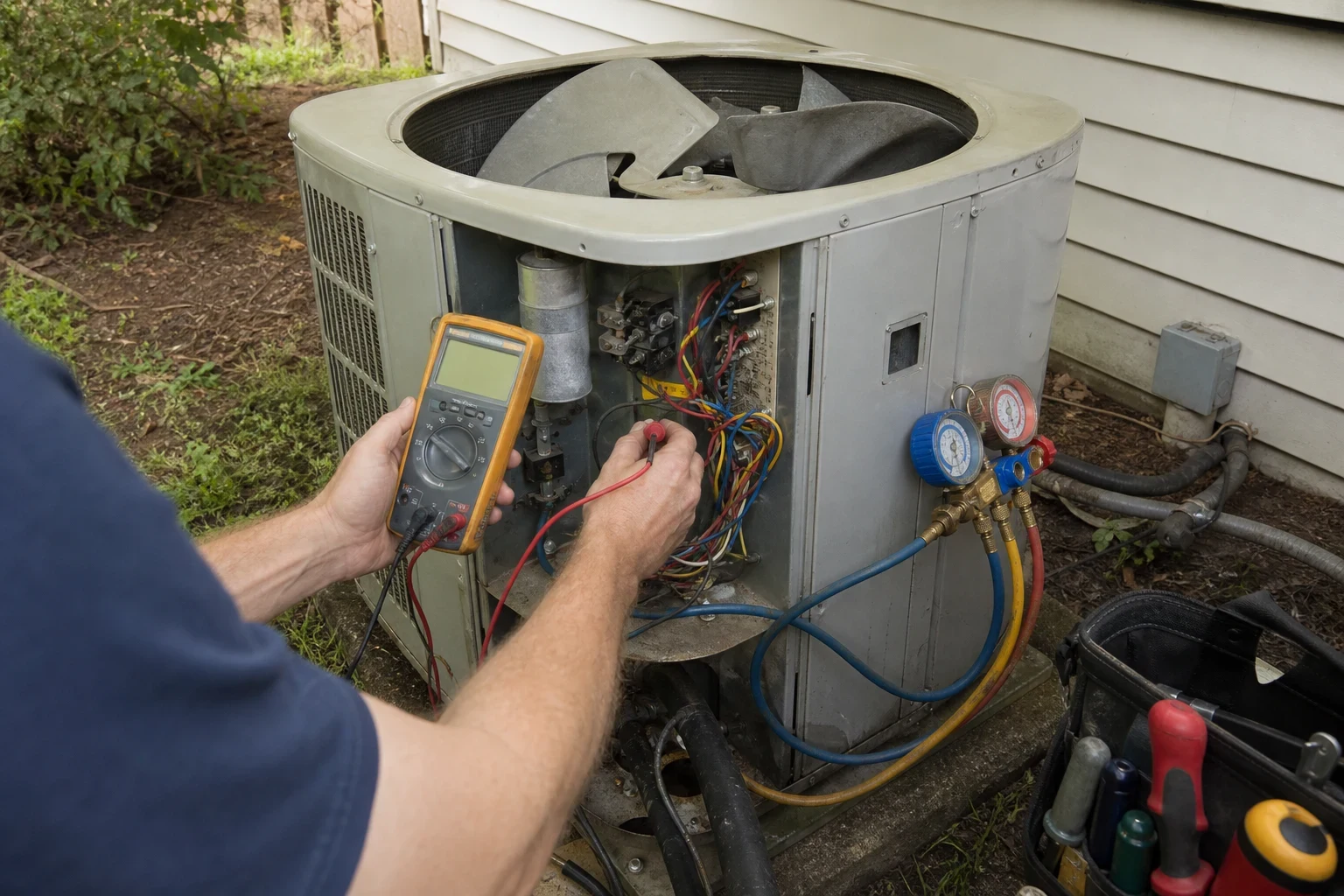
When Repair Is the Right Call for Your AC
A central air conditioner that stops cooling has usually lost one component, not the whole system. The likely list is short: a run capacitor that has drifted below its rated microfarads, a contactor with burned points, an outdoor fan motor with dry bearings, a condensate line packed with algae, or refrigerant seeping out of a coil or brazed joint. Every one of those has a cause behind it. A capacitor that bulges each July is often being cooked by a motor that runs hot, so swapping only the capacitor buys a few weeks.
Older houses bring their own history. We often open a cabinet and find a newer condenser matched to an original indoor coil, splices wrapped in electrical tape, or a disconnect box rusted on the inside. We read that past work alongside the current symptom, because an old shortcut is frequently the thing that gave out.
Repair makes sense when the compressor windings and amp draw test normal and the fault sits in a part or fitting we can reach. If the compressor on an aging R-22 unit is wearing out, we say so plainly and walk you through AC installation or a heat pump as options, with no pressure toward either.
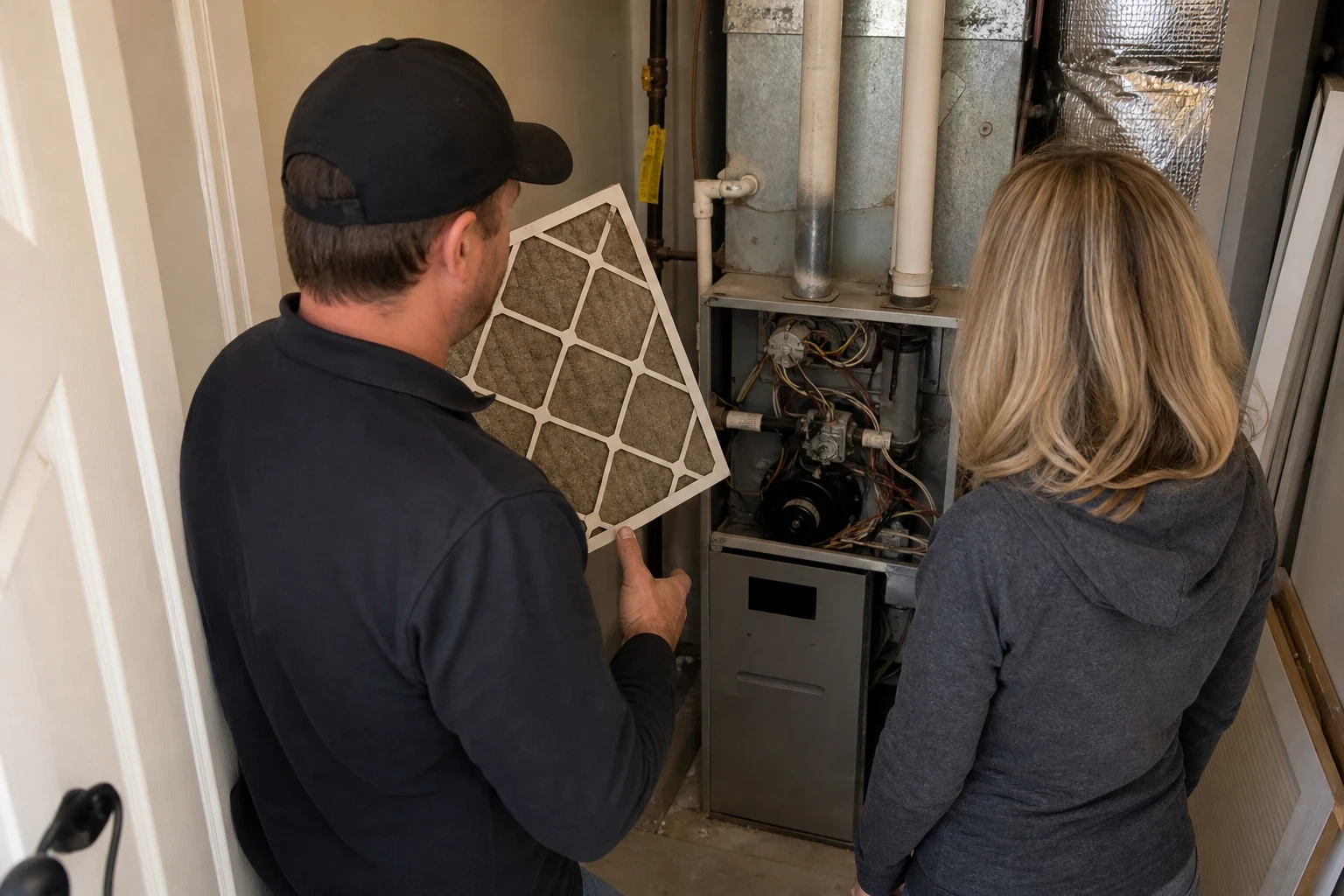
What Every AC Repair Visit Includes
- 01
Electrical testing
We measure capacitor microfarads against the rating, check contactor points for pitting, and read amp draw on the compressor and fan motor. Numbers tell us what is weak before it quits.
- 02
Refrigerant check
We read pressures and superheat or subcooling to confirm the charge. If it is low, we look for the leak instead of just topping it off, since refrigerant does not get used up.
- 03
Airflow and coil inspection
A dirty filter, matted evaporator coil or blocked condenser fins can freeze a coil or overheat a compressor. We check each one and tell you what we found.
- 04
Drain and safety switches
Clogged condensate lines trip float switches and shut the system down. We clear the line and confirm the switch works.
- 05
Past-repair review
On older equipment we look for mismatched parts, undersized wire, missing fuses and taped splices left behind by earlier work, and we note anything that could cause the next failure.
- 06
Price on paper first
Before any part comes off the truck, the repair and its price are written out for you to approve. Our diagnostic fee is credited toward the repair if you decide to move forward.
Questions about AC Repair?
Call(509) 512-2814Symptoms That Point to a Failed Part
Room-temperature air at the registers
Air moves through the house, but it never gets cold. A dead capacitor, a contactor that won't pull in, or a low charge from a leak are the usual culprits.
Condenser hums, fan sits still
A steady hum with no fan rotation usually means a motor trying to start without a working capacitor. Switch the system off at the thermostat so the windings don't overheat.
Frost on the copper line
Ice on the larger suction line or the indoor coil means the coil is running too cold, from poor airflow or a short charge. Letting it run frozen can send liquid refrigerant back to the compressor and damage it.
A breaker that won't stay on
A shorted motor, a compressor pulling high amps, or brittle wiring in an old disconnect can each trip the circuit. Resetting it again and again is a fire risk, so leave it off and get it checked.
Water pooling by the indoor unit
When the condensate drain clogs or the pan cracks, water backs up instead of draining away. It can ruin flooring or trip a float switch that shuts cooling down.
Short cycles and higher summer bills
A compressor that starts and stops every few minutes often traces back to the thermostat, a dirty coil or equipment too large for your home. Bills that creep up each summer usually mean longer run times for the same comfort.
From Your Call to a Cooler House
- 1
Start with a phone call
Let us know what the unit is doing and about how old it is. We answer 24/7, weekends included, and there are no emergency or after-hours fees.
- 2
Testing from thermostat to condenser
The technician confirms the thermostat is sending a call for cooling, then works through the indoor unit and the outdoor unit with meters and gauges. You see the failed part or the reading that proves it.
- 3
A written quote and your decision
We explain what broke, why, and whether another part looks close behind it. No work starts until you approve the price.
- 4
Repair, retest and cleanup
Once the part is replaced, we run the system and recheck pressures, amp draw and the temperature split across the coil. We clean the work area and keep the old parts for you to look at if you ask.
What Moves the Cost of AC Repair
Two things set most of the bill: which component gave out and how much labor it takes to reach it. Swapping a capacitor or contactor is a short visit, while tracing a leak or replacing a compressor takes more hours and material. The full figure is on paper before any tools come out.
- The failed component
- Electrical parts like capacitors, contactors and relays cost far less than a fan motor, coil or compressor.
- Refrigerant type
- Older systems that run on R-22 use refrigerant that is no longer produced, so recharging them costs much more than newer R-410A systems. That often changes the repair-or-replace math.
- Leak location
- A leak at a service valve or flare fitting is simple. A leak inside an evaporator coil may mean replacing the coil.
- Condition of earlier work
- If a past repair left undersized wire, a corroded disconnect or a mismatched part, correcting it adds to the job but keeps the same failure from coming back.
AC Repair Questions
Should I fix my old air conditioner or replace it?
It depends mostly on the compressor and the refrigerant. When the compressor tests sound and the fault is a capacitor, contactor, motor or a leak we can reach, repair is usually the better value. An R-22 unit that needs a new compressor or a large charge is a different case, and we price both paths so you can compare them side by side.
My capacitor has failed more than once. Why?
Heat and excess current wear capacitors out. A second or third failure usually means the fan motor is weakening, or the replacement installed last time had the wrong rating. We test the motor and check the rating rather than putting in the same part again.
Can't you just top off the refrigerant?
We can, but a system that is low is leaking somewhere, because refrigerant runs in a sealed loop. Recharging without a repair means paying for the same refrigerant again later. We find where it is escaping and tell you what fixing it involves.
Do I pay the diagnostic fee and the repair separately?
No. If you approve the repair, the diagnostic fee is credited toward it rather than added on. In both cases you see the price in writing before any work is done.
What can I do before the technician arrives?
If the coil is iced, the outdoor unit is humming without spinning, or the breaker has tripped, set the thermostat to off. Pull the filter and replace it if it is packed with dust. Then leave the system off so a minor failure does not turn into compressor damage.
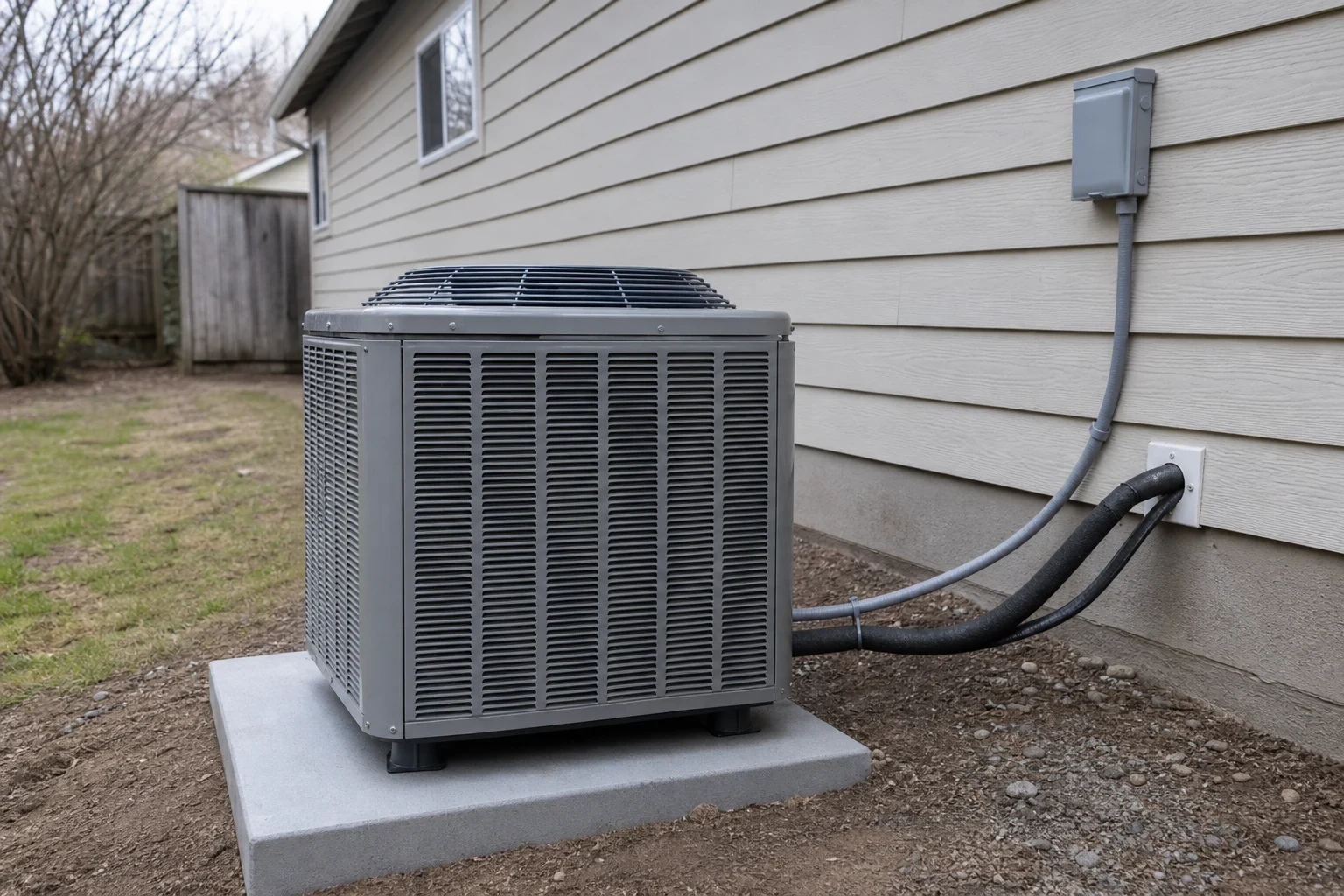
Get Your Air Conditioner Cooling Again
Tell us what the system is doing and we will find the cause, explain it and put the price in writing. We take AC repair calls day and night with no after-hours fees.