ServicesEmergency HVAC Repair
Emergency HVAC Repair in Rockford
When the furnace quits on a January night or the AC dies during a July heat wave, we come out at any hour. We pinpoint the failed part, show you what caused it and put the price on paper before a single repair starts. Nights and holidays cost no extra.
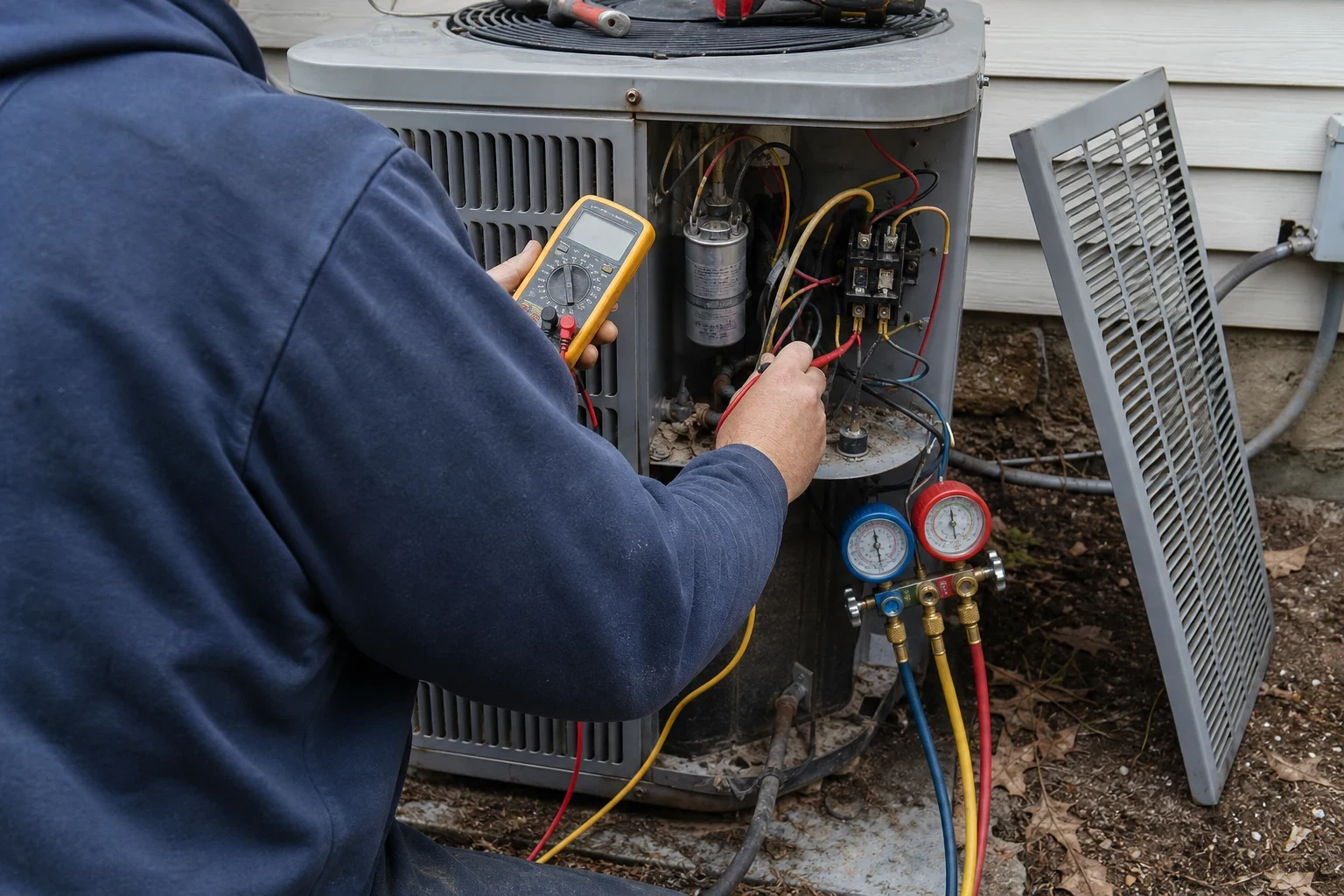
What counts as an HVAC emergency
Some breakdowns can't wait for a weekday appointment. That means no heat while it's below freezing outside, no cooling with an infant or elderly parent at home, a gas or burning smell near the furnace, or water spilling out of an air handler. We pick up those calls at any hour, weekends and holidays included.
Older houses add their own wrinkles. A furnace patched by three different owners may have a jumpered limit switch, a universal igniter wired in wrong, or a thermostat on two-wire cable that can't power a modern control. We trace the failure back to its cause so the fix holds past tonight, and we tell you plainly when a repair is only a stopgap.
If the problem can safely wait until morning, we will say so, and a scheduled visit through our furnace repair or AC repair service may be the better fit.
What an emergency visit covers
Safety check first
Before restoring anything, we check gas fittings for leaks, measure carbon monoxide around the furnace and flue, and confirm the vent is drafting. On older atmospheric furnaces, a cracked heat exchanger or blocked chimney liner is what we rule out first.
Diagnosis by testing, not guessing
We read the control board fault codes and test the flame sensor, igniter, pressure switch and inducer motor on a furnace, or the run capacitor, contactor and compressor windings on an AC. If you go ahead with the fix, the diagnostic fee is applied to the repair bill.
Price in writing up front
The part, the labor and the total are listed on paper before any tools come out. Nothing moves forward until you approve it.
Common failure parts on hand
We stock the parts that fail most often: hot surface igniters, flame sensors, capacitors, contactors, limit switches and universal control boards. The aim is to get your system running on the first trip.
A safe plan when a part is obsolete
Parts for decades-old equipment sometimes take a day or two to source. When that happens we leave the system safe, set up a temporary fix where one is possible, and show you how to keep pipes from freezing in the meantime.
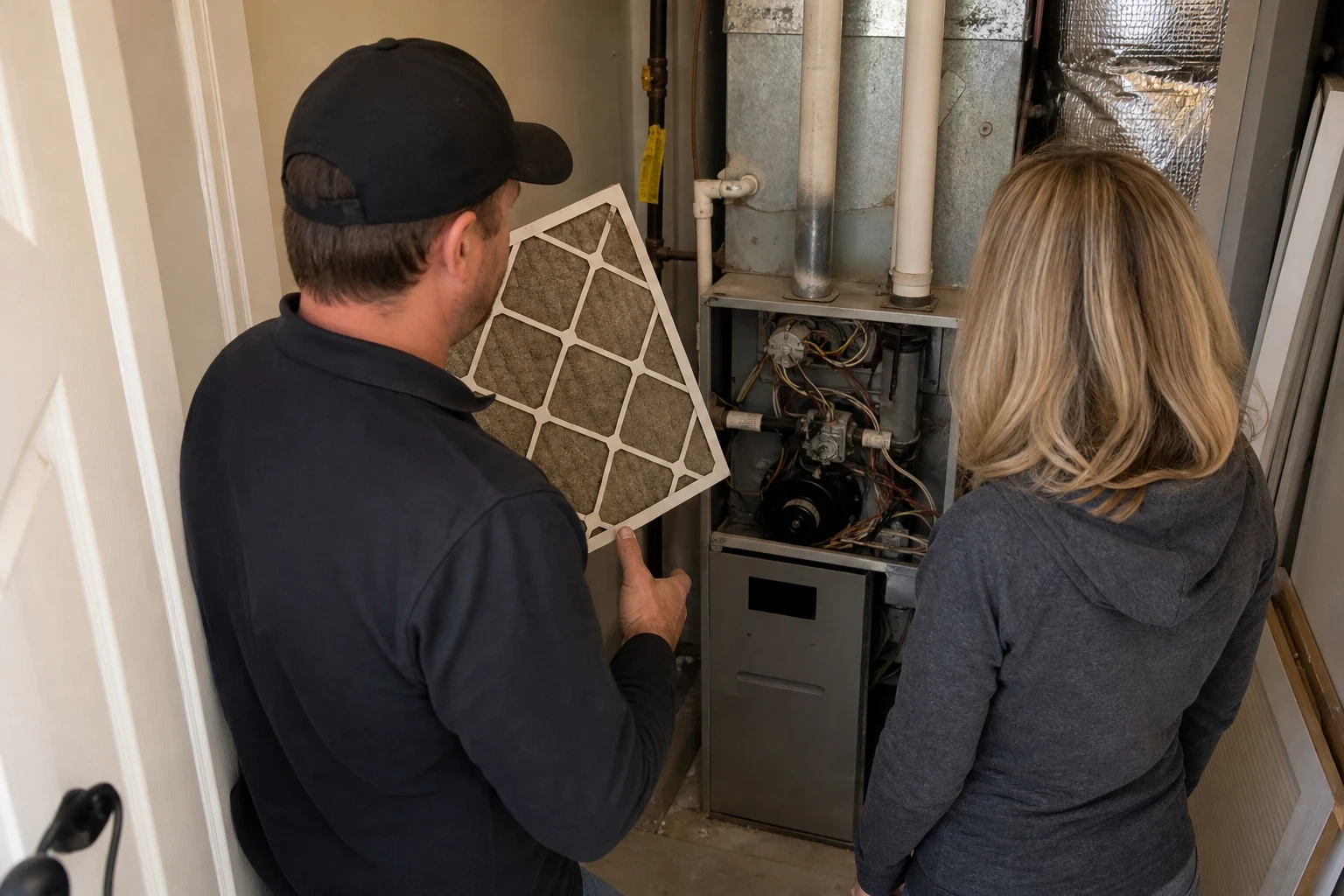
Signs you need emergency HVAC repair
- A gas or burning smell
- A rotten-egg smell means get everyone outside and call the gas utility first. A hot electrical smell that doesn't fade a few minutes after startup usually points to a failing blower motor or overheated wiring.
- Carbon monoxide alarm sounding
- Shut the furnace off at the switch, open windows and leave. A CO alarm often traces back to a blocked flue, a cracked heat exchanger or a backdrafting water heater sharing the chimney.
- No heat in freezing weather
- If the indoor temperature keeps dropping, pipes in exterior walls and crawlspaces are at risk within hours.
- Burners light, then shut off
- The igniter glows, the flame catches and dies a few seconds later, and after three tries the board locks out. That pattern usually means a dirty flame sensor, a weak pressure switch or a venting restriction.
- Warm air from the AC in a heat wave
- The fan runs but the air is warm. A failed capacitor, a burned contactor, a refrigerant leak or a frozen coil are the usual causes.
- Water around the furnace or air handler
- A clogged condensate drain on a high-efficiency furnace or AC coil can overflow onto floors and ceilings below.
How an emergency call runs
- 1
You tell us what's happening
Describe what the system is doing, any smells or alarms, and the equipment age if you know it. If there is a safety risk, we tell you what to shut off before we arrive.
- 2
Safety check on arrival
We test for gas and carbon monoxide and look over the venting before running the equipment.
- 3
Diagnosis and written quote
We isolate the failed component, show it to you and explain why it failed. You get the price in writing before work starts.
- 4
Repair and full-cycle test
After the repair we run complete heating or cooling cycles and check temperature rise or split, gas pressure and motor amp draw, so we know the fix is stable.
- 5
An honest look ahead
If the failure hints at a bigger problem, such as a worn compressor or corroded burners, we tell you and lay out repair and replacement side by side. No pressure either way.
What affects the cost of an emergency repair
There is no extra charge for nights, weekends or holidays, so the price comes down to the repair itself. The diagnostic fee counts toward the repair once you approve it. Every job is written out for you to sign off on before we touch the equipment.
- Which part failed
- A run capacitor or flame sensor is a small job. An inducer motor, control board or compressor is a much larger one.
- Equipment age and parts supply
- Older units may need discontinued parts or a universal replacement with adapted wiring, which adds labor.
- Past repairs that need correcting
- Jumpered safety switches, wrong-size breakers or undersized wire left by earlier work have to be fixed before the system can run safely.
- Refrigerant type
- Older air conditioners that use R-22 rely on a phased-out refrigerant that is scarce and costly, so a leak repair and recharge costs more than on newer systems.
- Access
- Equipment in a tight attic, crawlspace or closet takes longer to reach and work on.
Emergency repair questions
- Do you really charge the same in the middle of the night?
- Yes. We have no emergency or after-hours fees. A 2 a.m. repair is priced the same as a weekday afternoon one, and you see that price in writing first.
- What should I do while I wait for you?
- Check the breaker, the furnace service switch, the filter and the thermostat batteries. Don't keep resetting a furnace that locks out, since repeated restarts can mask the cause. In freezing weather, open cabinet doors under sinks and let faucets drip. If you smell gas, leave the house and call the gas utility.
- Can you fix a 25-year-old furnace?
- Often, yes. Many parts for older furnaces are still made or have universal replacements. If we find a cracked heat exchanger or another hazard, we will shut the unit off and explain why rather than restart something unsafe.
- My AC uses R-22. Is it still worth repairing?
- Sometimes. A failed capacitor or contactor is still a sensible fix. A large refrigerant leak on an R-22 system is expensive to recharge, and in that case we will walk you through repair against a new AC or a heat pump.
- Will you push me into a new system?
- No. We put the repair price and, if relevant, a replacement option in writing so you can compare. Estimates are free on installations and replacements.
- Do you cover areas outside Rockford?
- Yes. We take emergency calls in Rockford and nearby towns including Spokane Valley, Liberty Lake, Fairwood and Mead.
Furnace out or AC down tonight
Pick up the phone and describe the symptoms. While we're on the line we'll cover what to switch off for safety, then get a technician on the road to your home. Nights and weekends cost no extra, and the price is on paper before any repair starts.